






“You are not your user” is emblazoned on the wall of our Dublin office, and for good reason.
Designers can do a lot, but only the end user actually understands whether a solution really works. A good design process always refers back to real users, applying their insights and feedback towards the creation of each feature. This is the central logic behind user acceptance testing, a process which assesses a pre-launch solution by exposing it to a representative range of end users.
Effective user acceptance testing provides an unmatched level of confidence prior to a wider launch or publication, ensuring that any possible errors are identified and remediated ahead of time. It also gives your team an unprecedented insight into how your users actually use your product, something which can feed into future design, marketing, and sales work.
User acceptance testing: The basics
Firstly, what is user acceptance testing? User testing refers to the practice of testing features or designs with their intended end users. In the case of user acceptance testing, this testing occurs prior to launch to ensure that all features function effectively.
User testing is often designed to mimic “real world” scenarios that users may encounter. Methods for testing this include:
- Timed tasks involving navigation to a pre-determined feature.
- Bug reporting exercises where users note any glitches during their interactions.
- Pass/fail tests to see if users can accomplish a specific task within the platform.
- Mediated tests in which users communicate with a moderator whilst attempting tasks.
Depending on the specific goal of your platform, some or all of the above may be used, and the performance of users will be used to assess the functionality of the design.
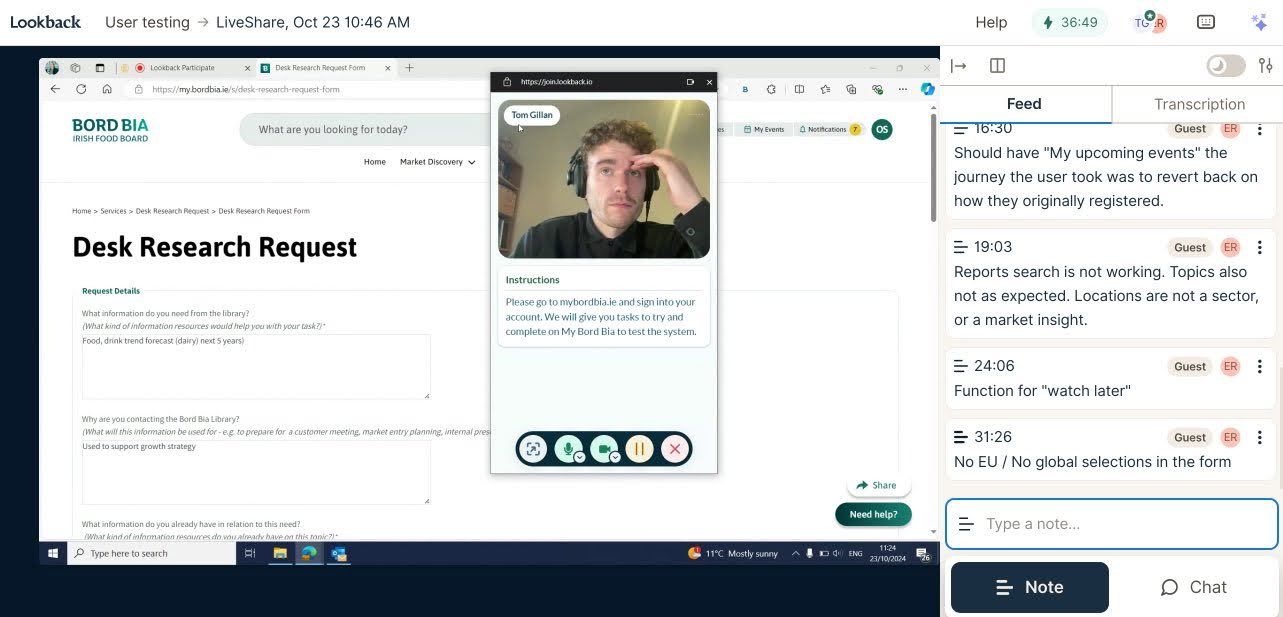
An example of moderated user testing for Bord Bia.
Testing the system or testing the user?
One important benefit of user acceptance testing is that it measures the ability of users to accomplish their goals, not the “objective” or “abstract” functionality of the solution. This is what makes it distinct from system testing, which involves testing features in a static and controlled environment. User testing instead exposes your platform to all of the chaos and randomness that comes with genuine human interaction, and reveals the surprising ways users will seek to deploy the tools you offer them.
In this sense user testing is messy and unpredictable, but also deeply practical. It doesn’t measure if the solution works but rather if your users can make it work for them. This is an important distinction, and one which can prove crucial to the ultimate functionality of your platform.
The test ecosystem
Of course, there is more than one way to test a digital platform. At Kooba, we frequently engage in qualitative and quantitative UX reviews prior to our design phase, as well as comprehensive accessibility audits using both manual and automated systems. These are essential on larger projects, helping to scope requirements, manage costs, and deliver compliant solutions from launch onwards.
Within this wider testing ecosystem, user acceptance testing serves as a final “catchall” for previously unidentified flaws, errors, and use-cases. As thorough as previous accessibility audits and UX analysis may have been, they simply cannot replace the process of a real user actually stress-testing your design. User testing therefore serves as a final check in the sign-off process, but also the beginning of a new design cycle, with findings feeding back into future iterations.
More than approval
Testing does more than just provide pre-launch assurance. It also gives you valuable insights into user expectations and behaviour. One benefit of moderated testing, for instance, is the ability to gauge how users interpret written copy, user interface features, and navigation tools in real-time. This understanding of user intent can be very useful when designing new product features and marketing campaigns.
User acceptance testing provides an efficient, secure, and insightful solution for teams seeking pre-launch assurance. It not only rubberstamps previous work, but builds a foundation for future iterations and improvements.
If you’re looking for a bespoke user acceptance testing process, just get in touch with our specialist UX team at Kooba, we’d love to talk!