




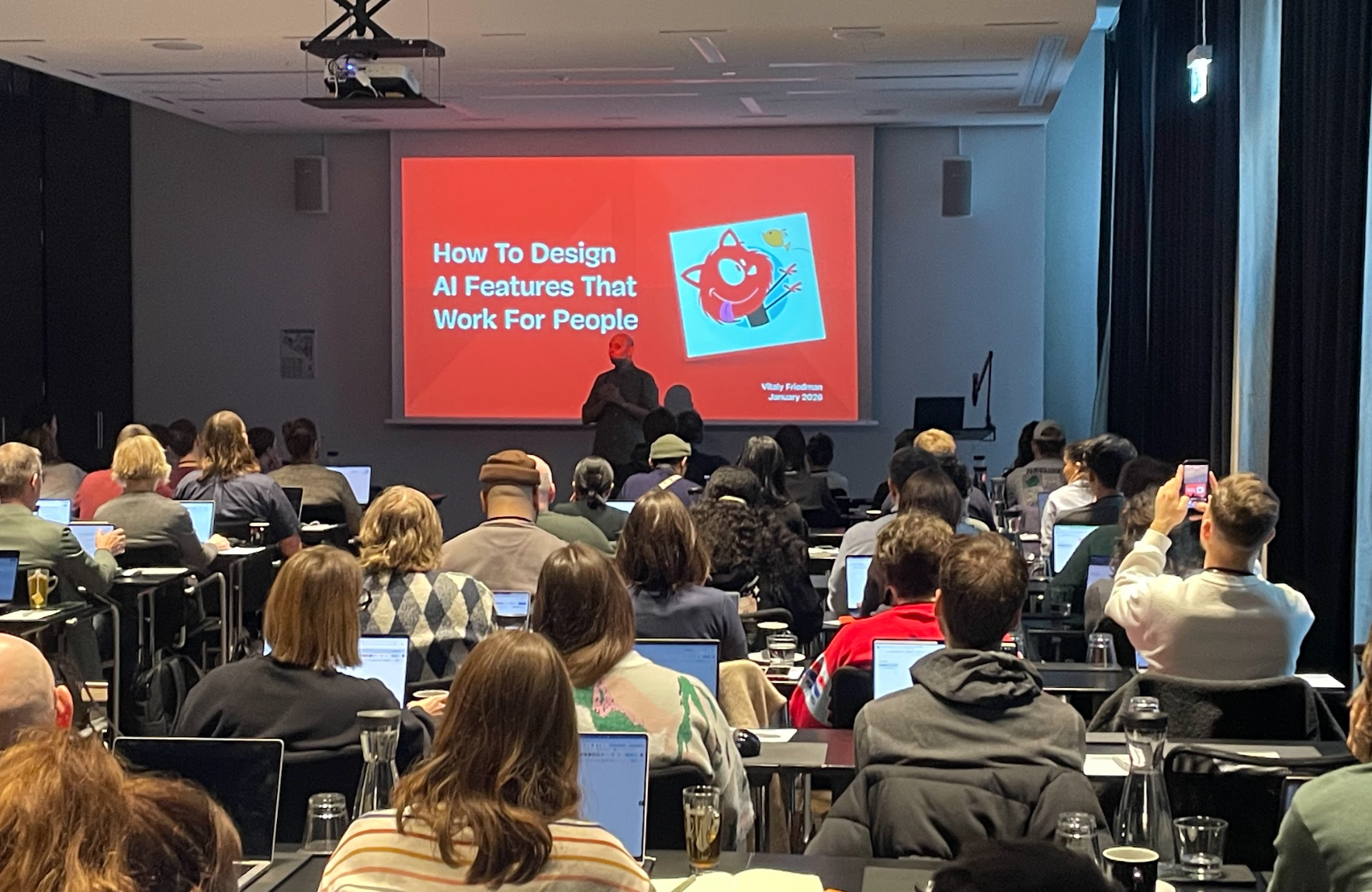

“A Golden Age of UX Research”. That’s how Julian Della Mattia described the possibilities of AI at prompt: UX, a meeting of experts hosted in Berlin. At Kooba, we can’t help but agree. AI is set to expand the horizon of research and design possibilities, with dramatic benefits for clients, designers, and end users.
But that doesn’t mean we endorse the reckless adoption of these tools. As our time at the prompt: UX conference taught us, the use of AI tools needs to be strategic and thoughtful in order to deliver effective digital solutions.
The value of adaptive interfaces
Imagine opening the website of a financial company, and starting your journey with a personalised conversation, with the answers you provide creating design changes to the interface in front of your eyes.
This was a task which we undertook during a workshop on adaptive AI interfaces, design solutions which evolve to match user demands and behaviour, and help maximise satisfaction and conversions.
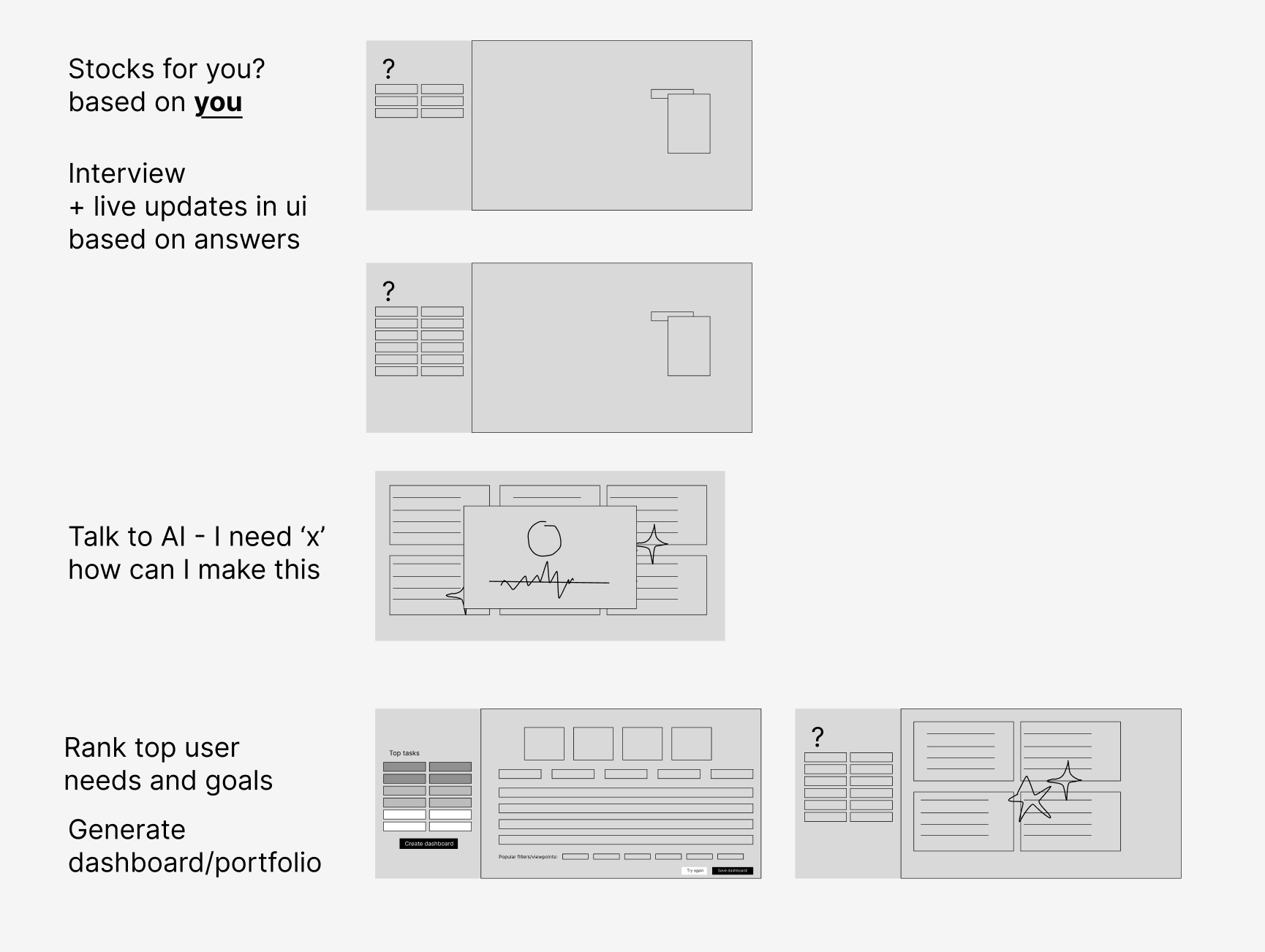
Whilst the team at Kooba have written about these adaptive solutions for over a year, prompt: UX encouraged us to get creative in thinking about the ways this technology could be used. In the above example, we thought of building a bespoke information dashboard based on user queries, and using the conversation format to directly gather information on user intent.
Guardrails in the playground
A great way of thinking about these adaptive AI solutions is as contained areas of experimentation. As Filippos Petridis argued, the role of modern designers will be to determine the limits, roles, and functions of AI agents within digital solutions. By mapping out the areas of non-human responsibility, we can then turn our own attention to the features that only humans can design and build. AI agents are now strong enough to fend for themselves, provided we can build them the environments to do so.
Taste still matters
One crucial distinction made by several speakers was between the ability to create and the ability to judge. Whilst AI is increasingly useful as a creative tool, it can still struggle as an editorial one. Having an understanding of what is (and isn’t) relevant within research findings and design mockups continues to be an indispensable human skill.
Taste might be a tricky concept to define, but it is now essential for teams aiming to harness AI capabilities at scale. Knowing what to keep, and what to discard, is now a crucial skill for design teams.
Clarity is crucial
When including adaptive AI solutions within our designs, it is important to remember the basics of UX. When designing these solutions, you should be clear about their exact purpose. How will they improve the experience of the end user, generate more conversions, or increase your CTR? With this defined, their design should make this intended function clear to the end user, ensuring that their use does not feel forced or confusing.
New possibilities for website owners
For those looking to improve their digital presence, improvements in AI are great news. Advances in UX research like synthetic users can provide rapid testing and validation, especially when your real users are hard to reach. Adaptive AI designs deliver more personalised user experience, helping convert more of your key audiences. And conversational design allows us to gauge user intent better than ever before, leading to a greater understanding of who our users are, and why they interact with your brand.
Better yet, each of these new strategies can be combined with one another. For instance, synthetic users can anticipate common prompts and offer them proactively to users, saving them the time of writing and waiting for a response (which can be 20 - 40 seconds on average). The result is not only a more personalised experience, but also a faster and less demanding one.
New responsibilities for design teams
For design teams, the key will be the informed and strategic adoption of these tools. By applying a critical analysis of AI findings, ensuring the quality of training data, and choosing which decisions to prioritise, we can integrate AI solutions in an efficient way that delivers real value to the end user and the client.
If you’d like to learn more about the UX possibilities of your website, just get in touch with us today, we’d love to speak more!