





It can be tempting to separate acquisition and conversion when looking at a website. How users reach our website is the work of SEO, and how they convert depends on the design and development of the website itself.
However, the truth is more complicated than this simple division. The ways that users reach a website directly influence the expectations that they have upon arriving, and the internal performance of a website directly affects its ability to attract traffic. In other words, there is a significant overlap between SEO and UX design.
This area of overlap is often called search experience optimisation (SXO), and it has only grown more important with the rise of AI traffic sources.
What is SXO?
SXO allows us to create digital solutions that seamlessly channel users from discovery and search towards relevant content and effective conversion pipelines. It encompasses each element of a website, from development to design, ensuring that when a user clicks onto your page they receive the exact experience that they expect. This begins with the loading speed of your website, and includes visual design features, intuitive navigation, and audience-oriented copy and content.
One way to optimise the SXO of your website is to map out potential entry points for different personas. Does your homepage appeal to arrivals from social media as much as those from search engines? Do you need specialised landing pages for paid campaigns? These types of questions will help you better understand the ways in which you can improve your SXO.
A stylised map of these user journeys is shown below. As you can see, they start out in fairly simple and predictable ways, but grow progressively more complex.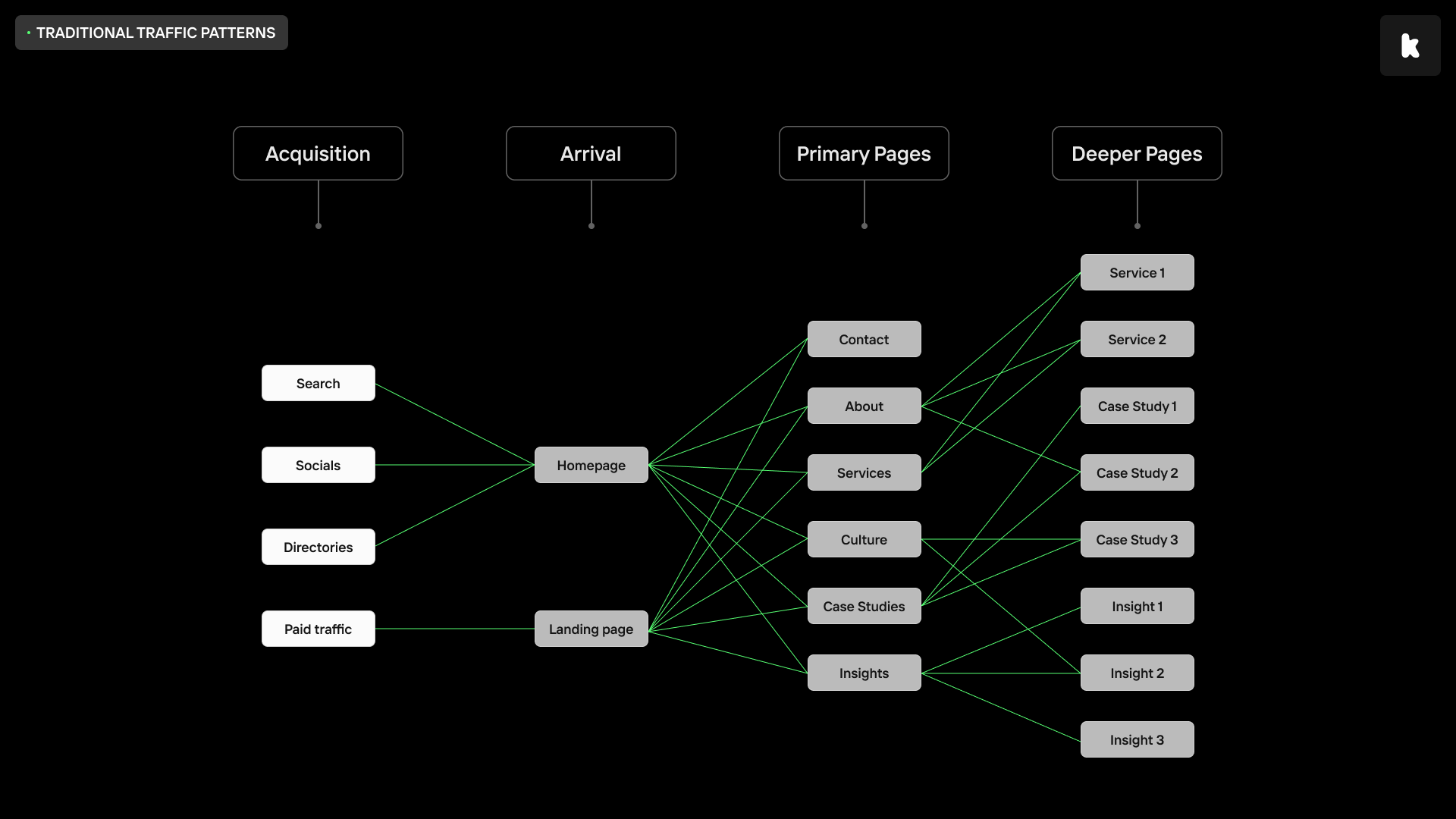
Why SXO matters for AI visibility
AI users arrive at your website in different ways, and with different context. Unlike traditional sources of traffic, which typically land on your homepage or a landing page, AI users are clicking onto your site following a conversation with an LLM. This makes them more likely to arrive on pages deeper within the site, be that a product page, blog article, or case study.
Here the crossover between SEO and UX thinking is particularly important, as the design of each page must avoid relying too heavily on context from “previous” pages. In fact, thinking about pages in a sequential order is less and less accurate, and whilst each page is connected, they must also be self-explanatory in their own right.
As the diagram below shows, traffic from AI sources can arrive at any page, and often in unpredictable ways. Your website now needs to be able to handle this influx of users in an efficient manner.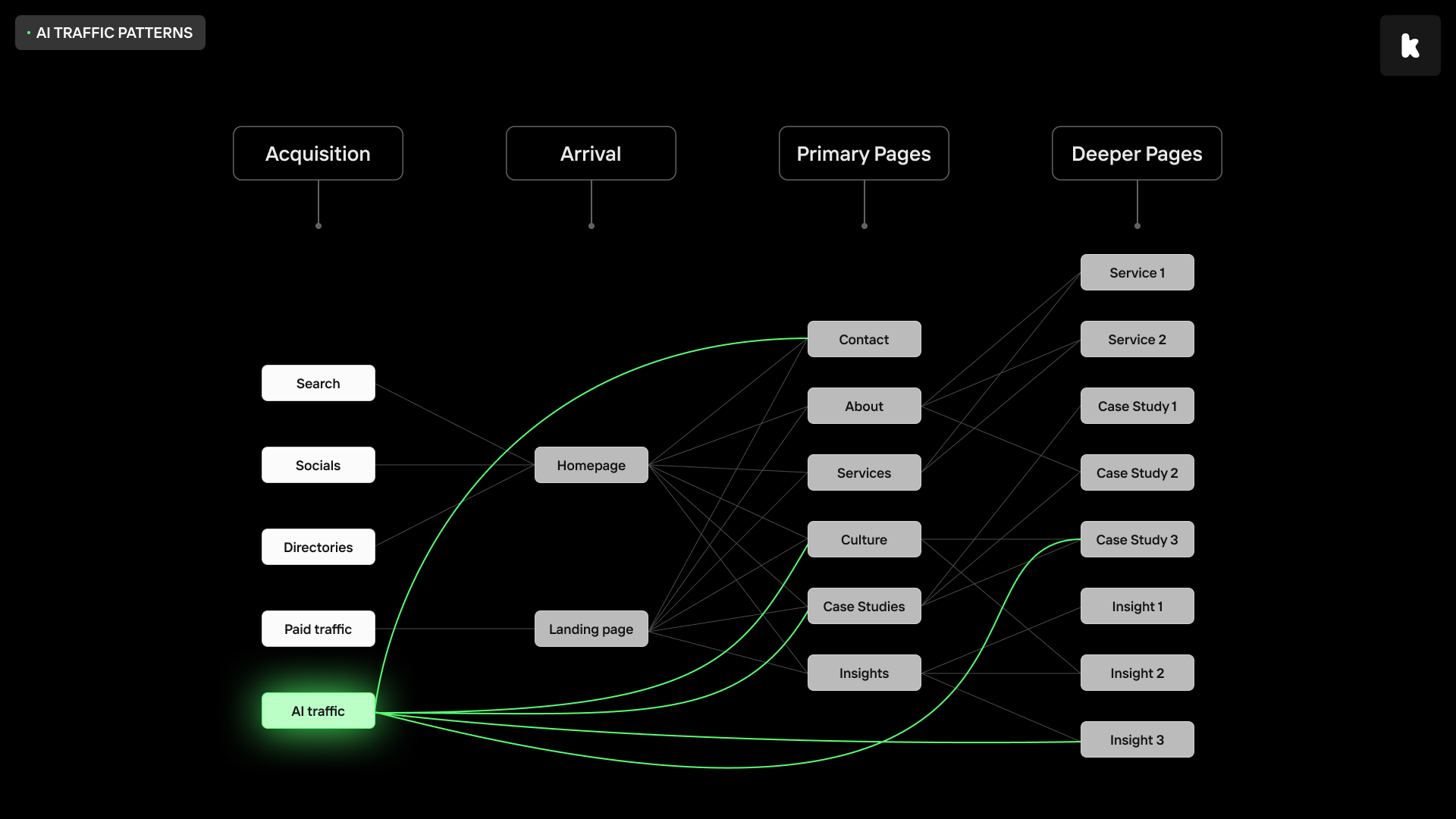
How can I improve my website’s SXO?
AI visibility overlaps with wider SXO considerations in two ways. Firstly, each page on your website needs to be able to welcome and convert visitors from AI sources without relying on additional context. That means creating a clear and usable design, and building simple and comprehensive content. Instead of thinking of sequential customer experiences, we should focus on a more diverse range of potential conversion pathways.
Secondly, we need to recognise that content from a website will now be pulled directly into the search experience itself. When users search on LLMs and search engines they will receive AI overviews that source information from your site. The development of your website and the nature of your content need to make this process as seamless as possible, helping gain traffic from high-intent queries.
Fortunately, these two patterns overlap nicely. By creating comprehensive and informative pages across your site, you’ll improve your visibility on AI tools and improve your odds of converting that traffic when it arrives on your site.
To start improving you SEO, UX, and SXO, just get in touch with our team today. We’d love to talk!