




When web design agencies like Kooba create websites, they do not design every page from scratch. Instead, they build re-usable and flexible modules that can be organised in different ways across the website.
This provides a more efficient and sustainable solution for website owners, and helps them get more long-term value out of their site. Here’s our breakdown of what a module is, and an overview of why they are so important to web designers.
What is a module?
A module is the basic building block of your website, and is designed and developed to be combined with other modules. Modules can be stacked together to create a page, and can be re-used across different sections of a website.
A good example is a “50:50”, one of the most common modules seen on websites. This consists of two blocks, one containing text and the other containing an image or multiple images. The image below shows a 50:50 on the SETU website, which has two images on one side and a header, some text, and a button on the other. If they’d like, the team at SETU could adjust any of this content, or they could re-use this module elsewhere on their website.
The difference between modules and pages
Normally when we think of websites we think of pages. Pages typically consist of multiple modules combined together. Some pages will also have unique elements that are not re-usable, but most pages will consist of a fixed set of modules populated and organised by the content team.
When we design websites, we are able to separate out the design of pages from the design of modules. We do this by creating a site map that plans out which pages will exist, and what the goal of each page is. Then we create modules that can be used on those pages, and finally we select the relevant modules for each page as needed. An illustration of this is shown below:
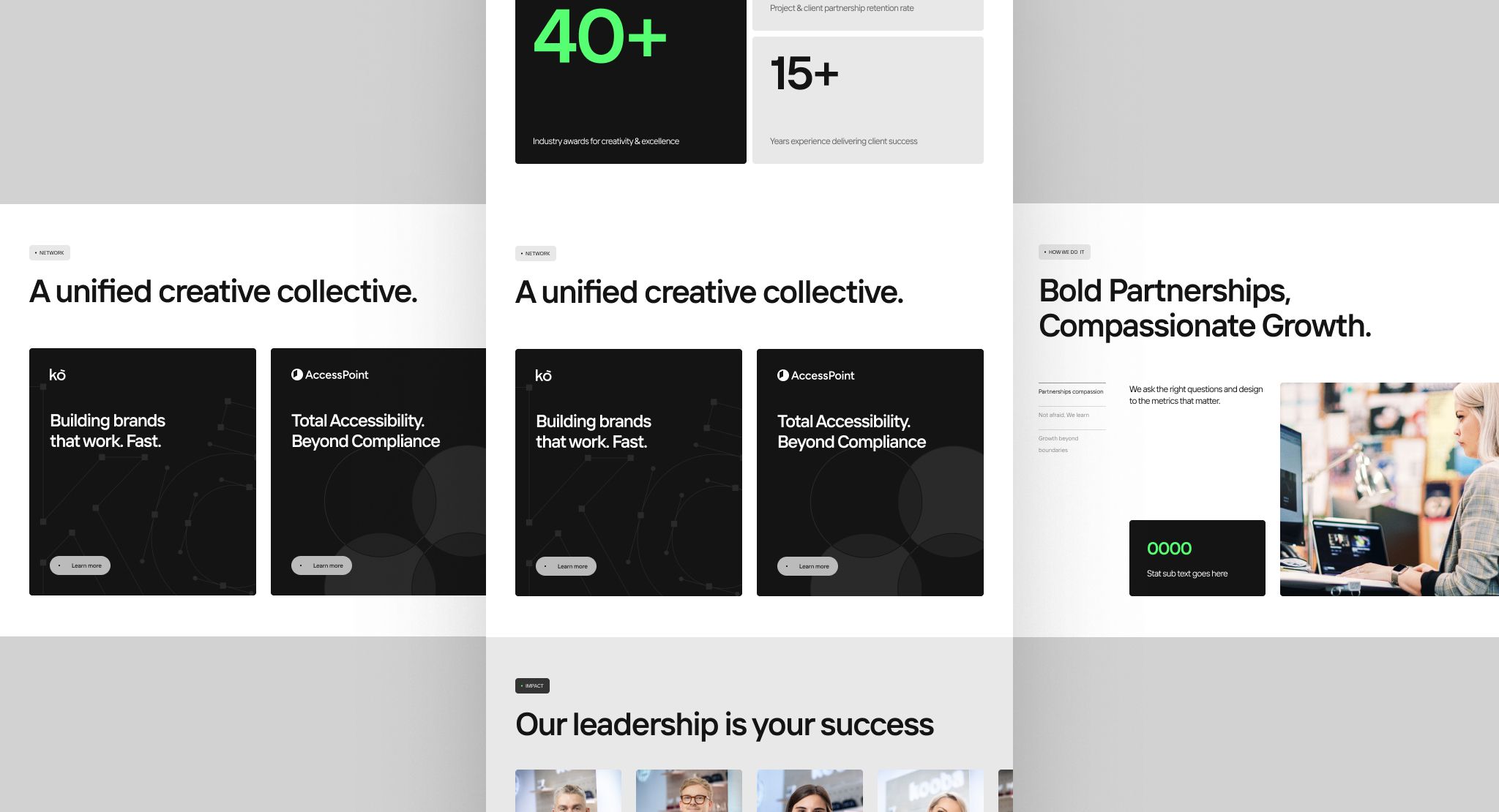
This might seem complicated, but it's really a case of delivering the ingredients (modules) as well as the recipe (the site map). Failing to provide either of these would leave clients unable to maintain or adapt their website as needed.
More bang for your buck
A major benefit of modules is that they reduce the cost of a website over time. When you have a set of well-designed modules that can each be combined with one another, the need for entirely new design solutions is diminished. And as you add more modules, the total number of possible combinations increases exponentially.
This means that we don’t need to design new pages from scratch, and that edits to existing pages can be handled by your content team via a user-friendly CMS. You’ll only need to come to us for bespoke new components and modules, ensuring that you get the most out of our time.
See the example below of how a new page can be created by re-organising existing modules: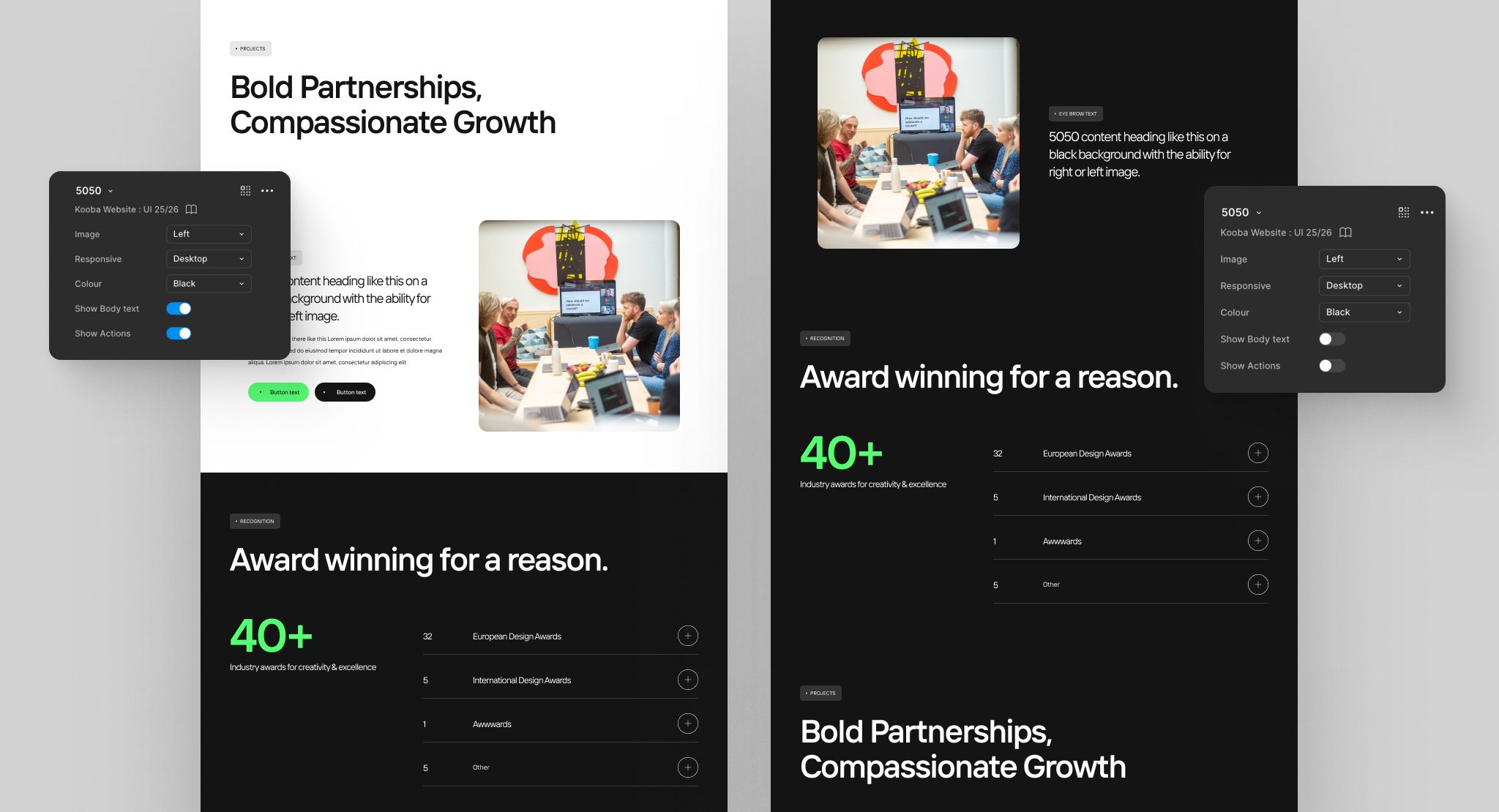
Long-term flexibility for content teams
In the long run, modules also provide content teams with increased efficiency and flexibility. Because each module can be saved and re-used within the CMS, you’ll save time on each edit you make to your website. And as you become more familiar with the modules available to you, you can start combining them in new and creative ways to enhance your content and better engage your audience.
At Kooba, we believe that our clients understand their business better than anyone else. A modular design system allows them to take the layout of their site into their own hands and find solutions that nobody else could think of.
The future of modular design
Modules are also important to understand for an entirely new reason. As AI tools become more effective at creating digital solutions, it will soon be possible to create websites that adapt in real time according to user behaviour. However, for such a solution to work in a stable manner, it will need a range of prebuilt modules which can be “mixed and matched” as needed by AI.
Building a modular solution ensures that your digital platform is suited for the adoption of generative interfaces, and minimises the time needed to prepare for this technology. It also prepares your team to think in terms of modular solutions, which will only become more popular in the future.
To learn more about the potential of modular solutions, or get started on your very own, reach out to our team today! We’d love to speak more with you.