






Most marketing teams have access to more audience data than ever. Website analytics can show where traffic comes from, which pages perform well, where users drop off and what ultimately drives conversion.
Those numbers are essential for understanding performance. They reveal patterns in behaviour and help marketing teams identify where something may be working well or where attention is needed. However, they struggle to fully explain why people behave in a particular way, how they describe their needs or which concerns are shaping their decisions.
At Kooba, qualitative research is a core part of discovery. Interviews, workshops, surveys and other research methods help us understand the people behind the data. They give users space to explain their priorities in their own words and allow researchers to explore individual responses in greater depth.
One important element of this is search term analysis. Used to support qualitative discovery, it can show the language people use, the questions they ask and the needs they are expressing. It supports and strengthens direct research by bringing a wider set of real user queries under consideration.
Using search data as part of qualitative discovery
Every time a user searches on your website, we can capture a small piece of audience insight. Each search records a need, question or expectation in the language a user chose at that moment.
That makes search data a useful addition to qualitative discovery. It provides a broad and readily available source of audience language that can help teams identify areas to explore, test assumptions and spot themes earlier.
Search term analysis isn’t intended to replace interviews, workshops or surveys. Its value comes from complementing those methods. It can help researchers arrive with more informed questions, recognise recurring concerns and understand whether themes raised through direct research are also visible across a larger volume of searches.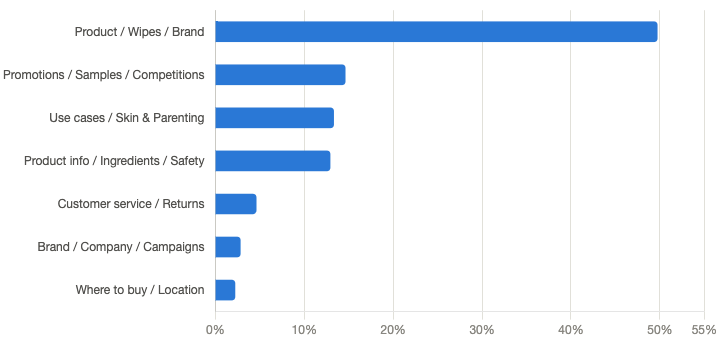
Site search and Search Console answer different questions
One interesting feature of search term analysis is that it can be carried out at the level of the search engine or on data within your website itself. These two options offer different insights and can complement one another.
Internal site search shows what people expect to find once they are already on a website. These users have chosen to visit and are actively looking for information, a service or a next step. Repeated searches around the same topic may indicate that important content is difficult to find. They can also point to unclear navigation, unfamiliar labels or a gap in the information available. For teams responsible for a website, this is a direct view of where user expectations and the current experience may not be aligned.
Google Search Console offers a different perspective. Its query data shows how people are searching before they arrive on the website. This can reveal the questions, problems and areas of interest that lead users towards an organisation, as well as the language they use when they may have little knowledge of its internal terminology.
Both of these sources add different context to our understanding of a website’s users. Site search provides insight into expectations within the website experience whereas Search Console provides insight into the language and intent that bring people there in the first place.
What search terms can reveal
Search terms can show us how users naturally describe problems, what questions keep coming up and where there may be gaps in content or messaging.
Several types of insight tend to be particularly useful:
- Audience language and terminology
- Recurring questions or areas of uncertainty
- Needs and intent
- Topics, products or service areas attracting attention
- Gaps in content, messaging or navigation
The language itself can be especially revealing. Organisations often develop internal terminology around their products and services, while users describe the same things very differently. Search analysis can help teams recognise that difference and use language that feels clearer and more familiar to the audience.
The questions people ask can also expose uncertainty. If similar queries keep appearing, users may need a clearer explanation, more reassurance or a more obvious route through the content. Patterns like these can inform messaging, information architecture and the priorities for future research.
How search data strengthens direct research
Interviews, workshops, focus groups and surveys provide a level of depth that search data cannot replicate. Researchers can ask follow-up questions, explore individual experiences and understand the context surrounding an opinion.
Search data can make those activities stronger. Before direct research begins, it can help identify themes worth exploring and provide examples of the language users already use. During workshops or interviews, those themes can be tested and explored in more detail. Afterwards, search volumes and patterns can help teams understand how widely certain questions or needs may be shared.
Because it is readily available, search data can also provide an ongoing source of insight between more focused research activities. It allows teams to monitor how audience questions and priorities are changing without treating it as a substitute for speaking directly to users.
Using AI to make search term analysis manageable
The scale of search data can make manual analysis difficult. A website or Search Console account may contain thousands of queries, many of them slight variations on the same underlying question.
Large language models can make that information easier to work with. LLMs are designed to interpret language, context and relationships between words, making them well suited to identifying patterns across large datasets of search terms.
AI-assisted analysis can group queries around shared themes, needs and intent. It can surface recurring questions, common frustrations, changes in terminology and potential content gaps. Instead of working through thousands of isolated phrases, marketing teams can begin with a structured view of what their audiences are consistently expressing.
Of course, human interpretation remains central to this process. AI can organise the raw material, but researchers and marketing teams still need to judge why a theme matters, how it relates to the wider customer journey and what action should follow.
Turning audience insight into better decisions
For marketing teams concerned about gaps in their messaging or content, the strongest approach is to bring several forms of evidence together.
Analytics, qualitative research, and search term analysis combine to create a wider view of audience language, questions, needs and intent. Each source contributes something different to the overall picture.
At Kooba, we use search analysis within wider UX, content and digital strategy work. It can help shape research questions, refine website structure, strengthen messaging and identify areas where new or improved content would be valuable.