





A lot goes into an effective product page.
For those using their website to promote a specific product range or technology, these pages are essential for outlining features, use cases, and comparative benefits. But when you have so much information to convey to your audience, how can your website accomplish everything at once?
I cover some of the most common strategies below:
Segmentation
The first step to building a successful product page is to define exactly which users you want to visit it. With this in mind, your navigation and homepage design can segment users into different categories, each of which is funnelled towards an appropriate product page. This ensures that each user receives relevant and useful information, helping them convert at their own pace.
Segmentation can take different forms based on your exact product and industry. You might split users based on the product itself, the sector they work in, or the use-case most relevant to them. In fact, you can allow each user to segment themselves by offering a range of different categories. Take our work with yieldHUB, where we presented users with solutions categorised across seven different dimensions. In this instance, each visitor could read bespoke content tailored to their specific needs, helping show the unique value offered by yieldHUB’s technology.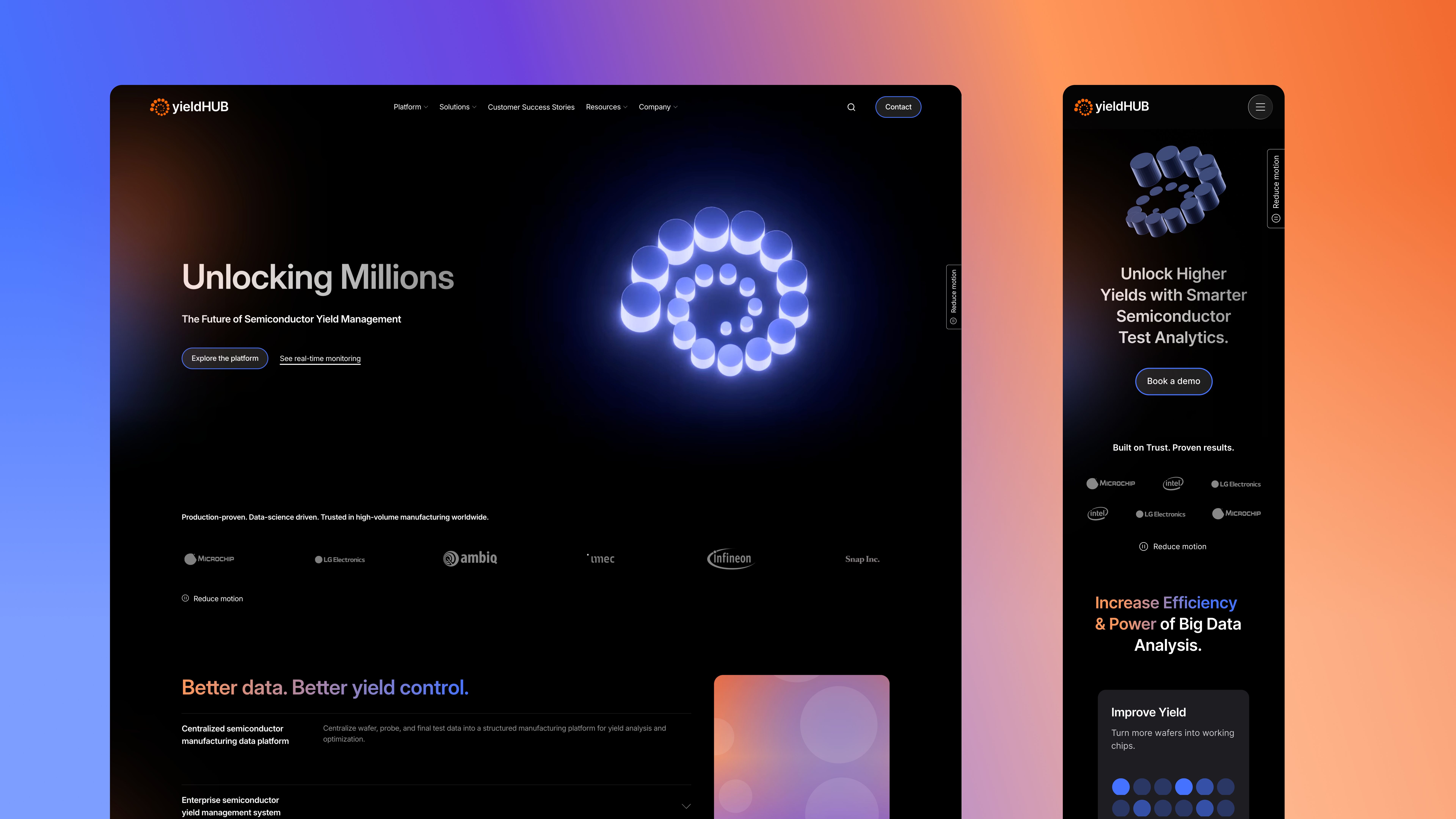
Discovery tools
Sometimes, it can be easier for your users to interact with a tool in order to find a relevant product. This is particularly true if you have a wide range of products, your audience is less familiar with your catalogue, or your solutions help solve very specific problems. In this instance, a bespoke discovery tool lets your audience provide information to filter their range of possible products.
Building a tool like this requires the careful categorisation of your products and their intended use-cases, and a thorough UX research phase to ensure that the tool is as efficient and concise as possible. The end result could be as simple as a filtered search bar, or as complex as an interactive questionnaire or quiz. The main benefit of this approach is that the user will understand the direct relevance of your product to their specific needs, making a conversion easier.
Illustration and animation
Of course, getting your audience to the right product is only half the battle. You’ll also need to clearly show features and capabilities, and help them convert from a user to a customer. This is where visual design can make a dramatic difference. By using illustration and animation, complex features can be stylised and simplified, helping viewers quickly understand the ways in which your technology and product functions. For sales teams in SaaS companies, this gives prospects an impression of the product before a demo even begins.
Our work with TimePoint is an excellent example of this in action, where abstract diagrams and illustrations helped users get a feel for the product before they saw it directly.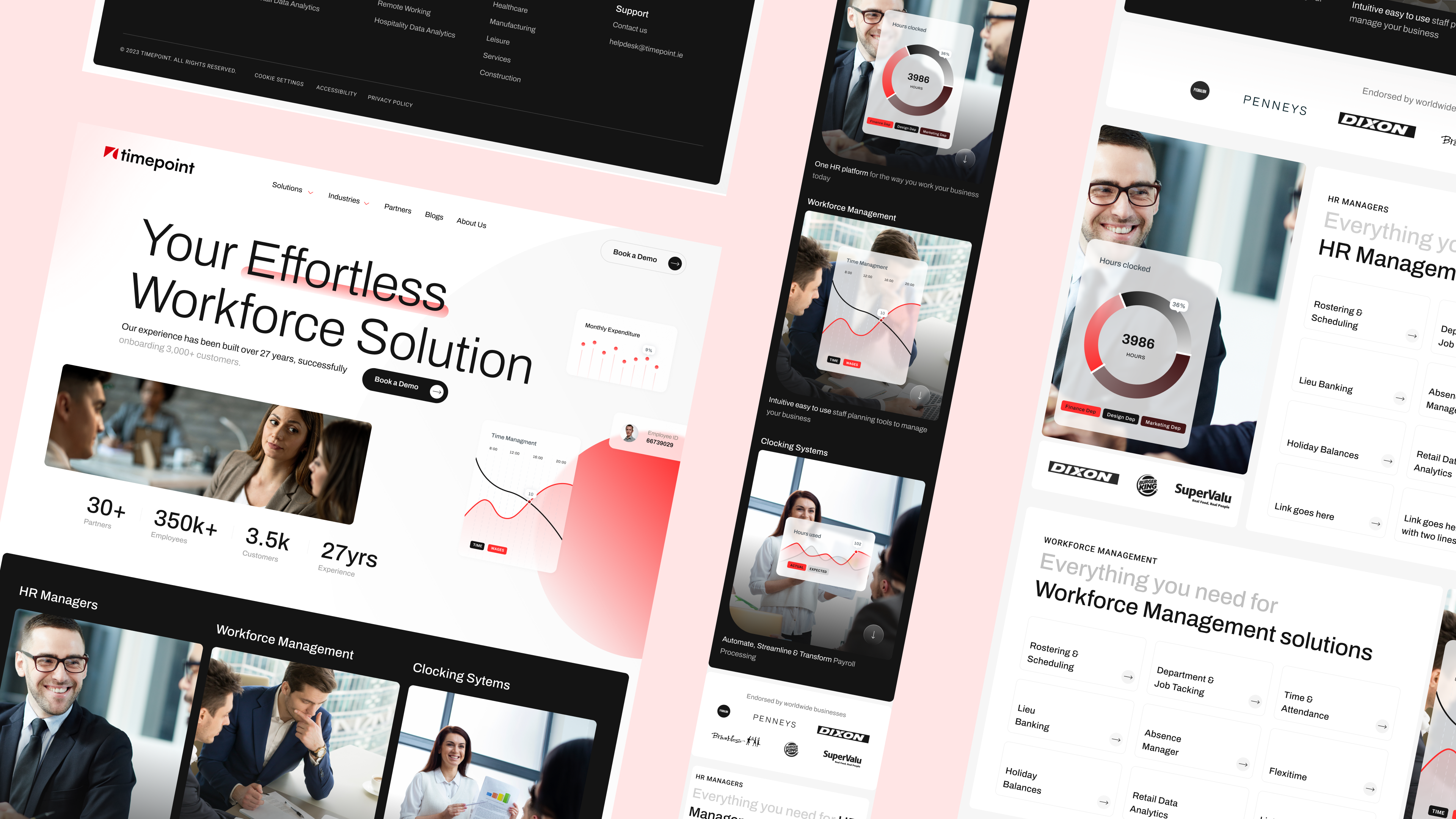
Accessibility and AI visibility
A new consideration for product pages is that of AI visibility. Whilst in the past prospective buyers would navigate to your website, and then to your product pages, this behaviour is beginning to change. Now, buyers may search directly into LLMs for specific product features, making comparisons with competitors in the process.
Your product pages play a key role in surfacing your brand on these queries. By ensuring that each relevant piece of product information is available on your website in a structured and clear format, you make it easier for AI tools to retrieve this content when users search for products in your category.
Accessibility plays a key role in this process. By writing semantic and logical code throughout your site, we can make each page more accessible to screen readers whilst also maximising the AI visibility of each piece of content. We can also add schema to product pages, allowing for additional information to be included below the visible frontend. This helps provide context to assistive technologies and AI agents.
The complete picture
Each product page is different, and for good reason. Every business needs to highlight different features, target different audiences, and convert different customers. The four points above highlight certain routes this might take, but it always depends on the client’s exact needs.
To start building your own AI-optimised product pages today, just get in touch with our team, we’d love to talk!