




When brands want to stand out from the crowd, they rely on distinctive brand assets. As of now, this still requires real human creativity, as AI tools still struggle to “think outside the box” and create unique designs.
Here’s why distinctiveness matters so much, and why humans are still essential is building it:
What is distinctiveness? And why does it matter?
For a brand to receive recognition and build awareness amongst its target audience, it must stand out. This is referred to as distinctiveness - the ability of a brand to be distinct from its competitors.
Distinctiveness is the result of many factors, but most obviously results from a unique visual identity. When unfamiliar consumers first encounter your brand, it will be your logo, colour palette and imagery that stand out first, and these may be the only assets that users engage with.
One way that we can think about this is by measuring how close your visual assets are to those of your competitors. In the graph below we can see a stylised illustration of this measurement. A set of brand assets have been categorised between light and dark (x axis), and square and circular (y axis).
As we can see, one option is further from the existing options in the market. We would expect the asset on the right to stand out more compared to the existing assets. This provides it with more distinctiveness and helps it build recognition in a crowded market.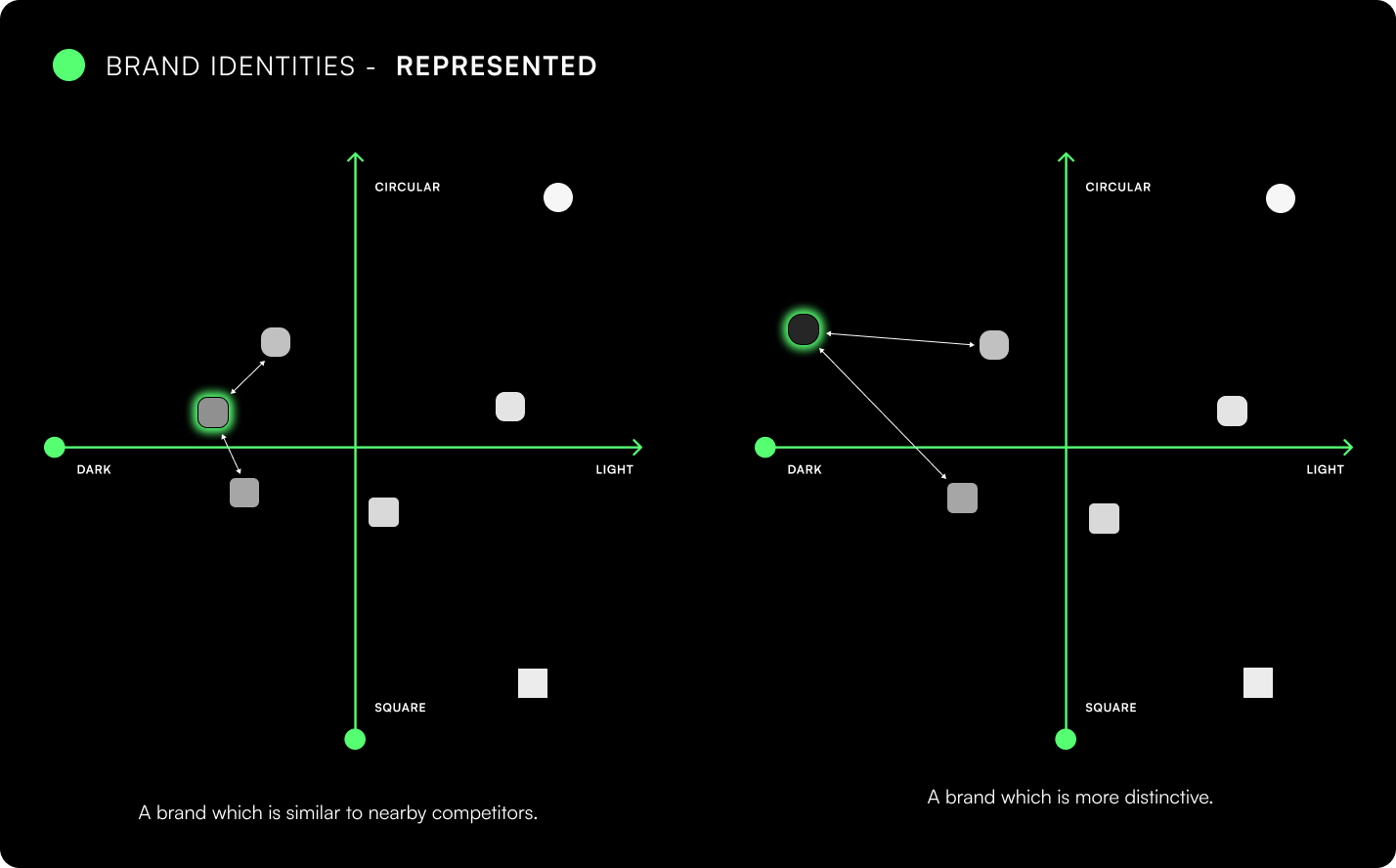
How LLMs work - finding averages
Over the past two years, more and more designers (including myself and my colleagues) have been using AI technology to help produce better work. The most popular of these AI tools are large language models (LLMs), which we can think of as prediction machines. When given a prompt, these models take huge volumes of existing data, and try to predict what their response should be based on patterns within that data.
So if I ask ChatGPT what day comes after Monday, it will answer Tuesday, because it sees a pattern of Tuesday following Monday within its data. Importantly, the model doesn’t actually “reason” or “know” what the answer is, it just guesses based on the average of previous answers.
What does this mean when we ask an LLM to design a brand asset? In short, it will create an asset that is very similar to those already existing in your industry. It will try to “fit in” by creating a safe, but average, design. This isn’t really a choice, it's just how the LLM works. It isn’t developed to “think outside the box”, and we shouldn’t ask it to.
How humans work - thinking outside the box
Of course, humans have no such limitation. When we engage in creative work we can see patterns in existing data (just like an LLM), but we can also consider solutions that have been missed by previous designs.
When we design brand assets, we can make them more distinctive by inverting audience expectations, and deliberately avoid patterns used by our competitors. The difference between these two approaches can be seen in the graph below. Whereas an LLM will find the “centre of gravity” between existing assets, a human is free to go far beyond the box of previous designs.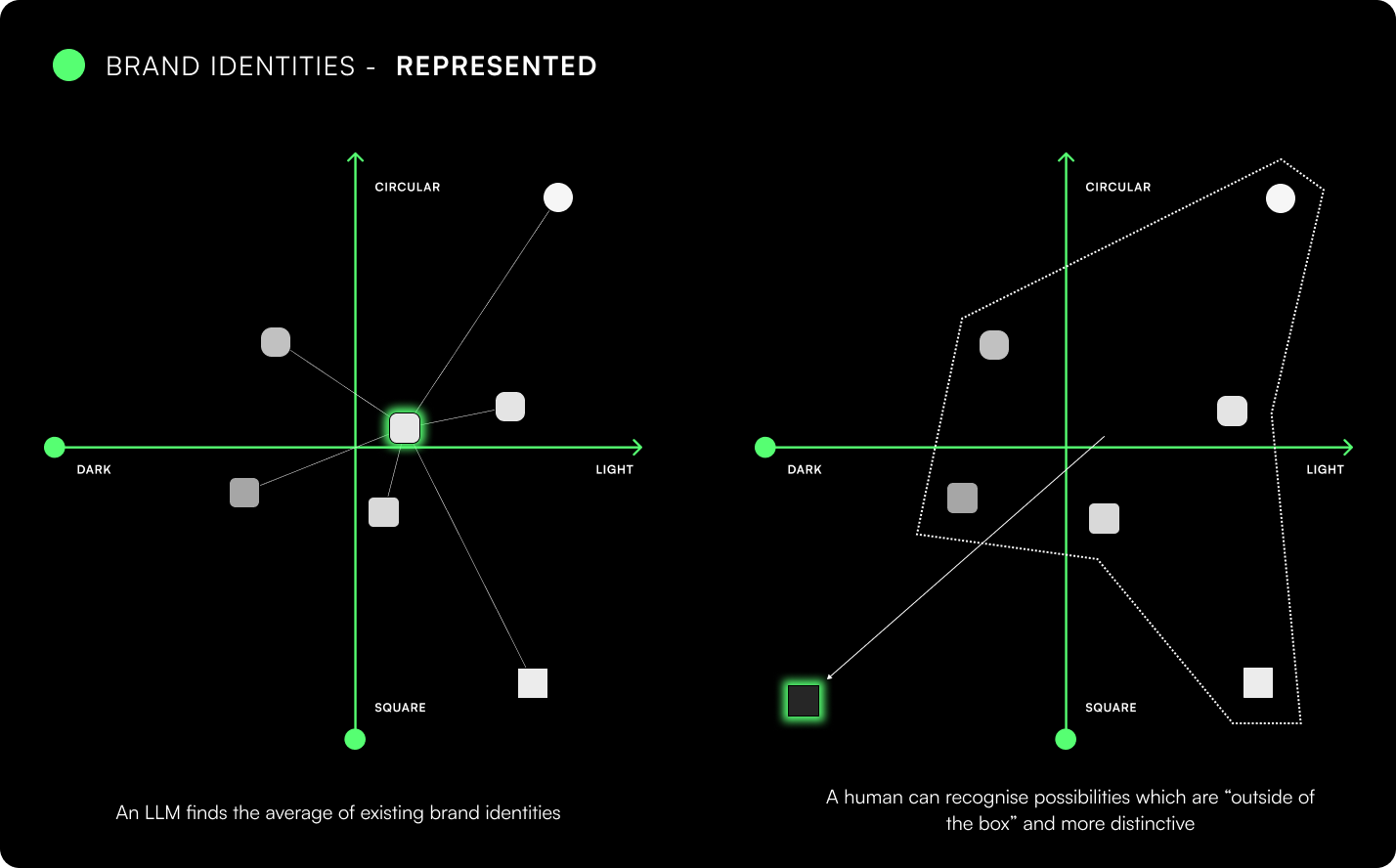
A real example: Liquid Death
Of course, the example above is very abstract. In the real world, not every logo or asset can be cleanly quantified along two dimensions. But that doesn’t mean we can’t find examples of human creativity deliberately building distinctiveness.
Take the example of Liquid Death, a $1.4 billion canned water business founded in 2018. Everything about the visual brand of Liquid Death breaks the conventions of the bottled water industry. The colour palette is dark, metallic, and aggressive, the logo evokes death and decay, and the font is gothic and serious.
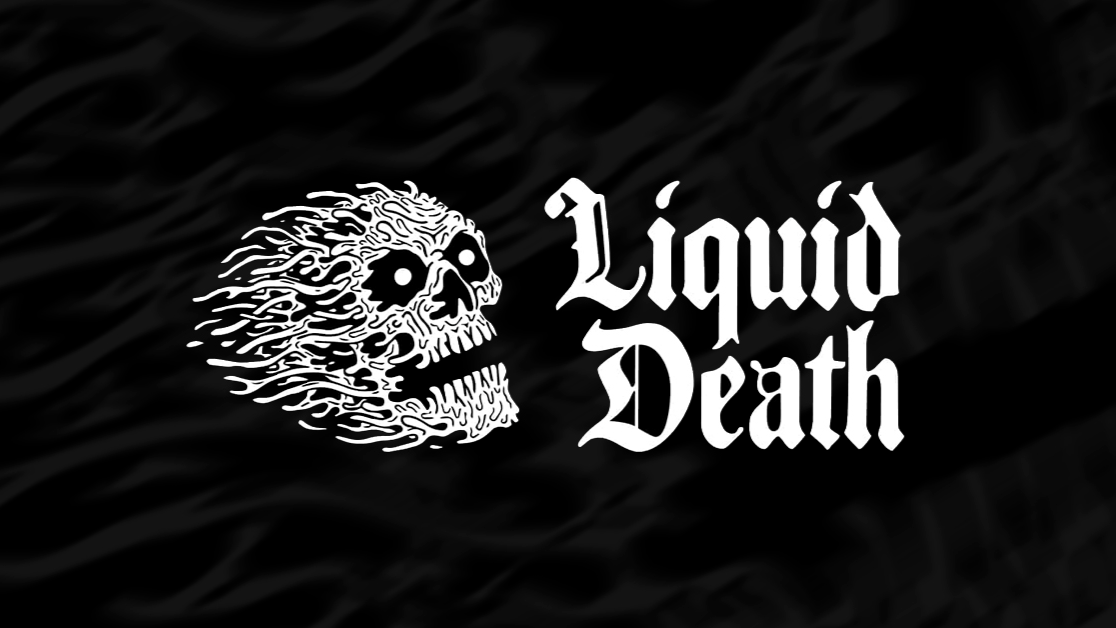
Of course, this isn’t a mistake. It’s a deliberate strategy to stand out from the crowd and build a strong brand identity within a competitive field. And importantly, it's the type of strategy which an LLM could not replicate. There was no “training data” that could have inspired such a design, only raw human creativity dedicated to building distinctiveness.
A small caveat: distinctiveness isn’t everything
So to summarise, human creativity is better at creating distinctive brand assets than LLMs are. But that doesn’t mean that you always need to find the most distinctive brand possible. Distinctiveness is a decision, not a fixed goal that applies in every scenario. In some cases, you may want your brand to “fit in” and be closer to the average. Doing this will allow customers to quickly understand the category which your brand fits into, and let you set expectations accurately.
Most of the time, brands will sit somewhere in the middle of the extremes. You might opt for a distinctive logo, but keep your colour scheme more basic, or change your messaging and copy but keep the visual brand aligned with industry standards. Either way, this is a strategic decision, and one which a human needs to make, not a machine.
What this means for branding (and LLM adoption)
How we create brands keeps changing, as do the outcomes we expect from our brands. Because of this, it's no surprise to see AI being deployed on more and more branding projects. But the reckless adoption of LLMs runs into hard limits when it comes to designing distinctive assets. When your business needs to stand out, human creativity is still a necessity.
That’s not to say that AI cannot help design teams, but we need to use these tools strategically, and only ask LLMs to do the tasks that they were developed to do. As we noted earlier this year, the most effective projects will use AI technology within clearly defined “guardrails” - not adopt it thoughtlessly across the board.
If you’d like to learn more about AI, LLMs, and all things branding, just get in touch with our team today, we’d love to speak!
Better yet, check out our specialised branding team at kō, where we focus on building strategic brands that make a real difference for clients.