



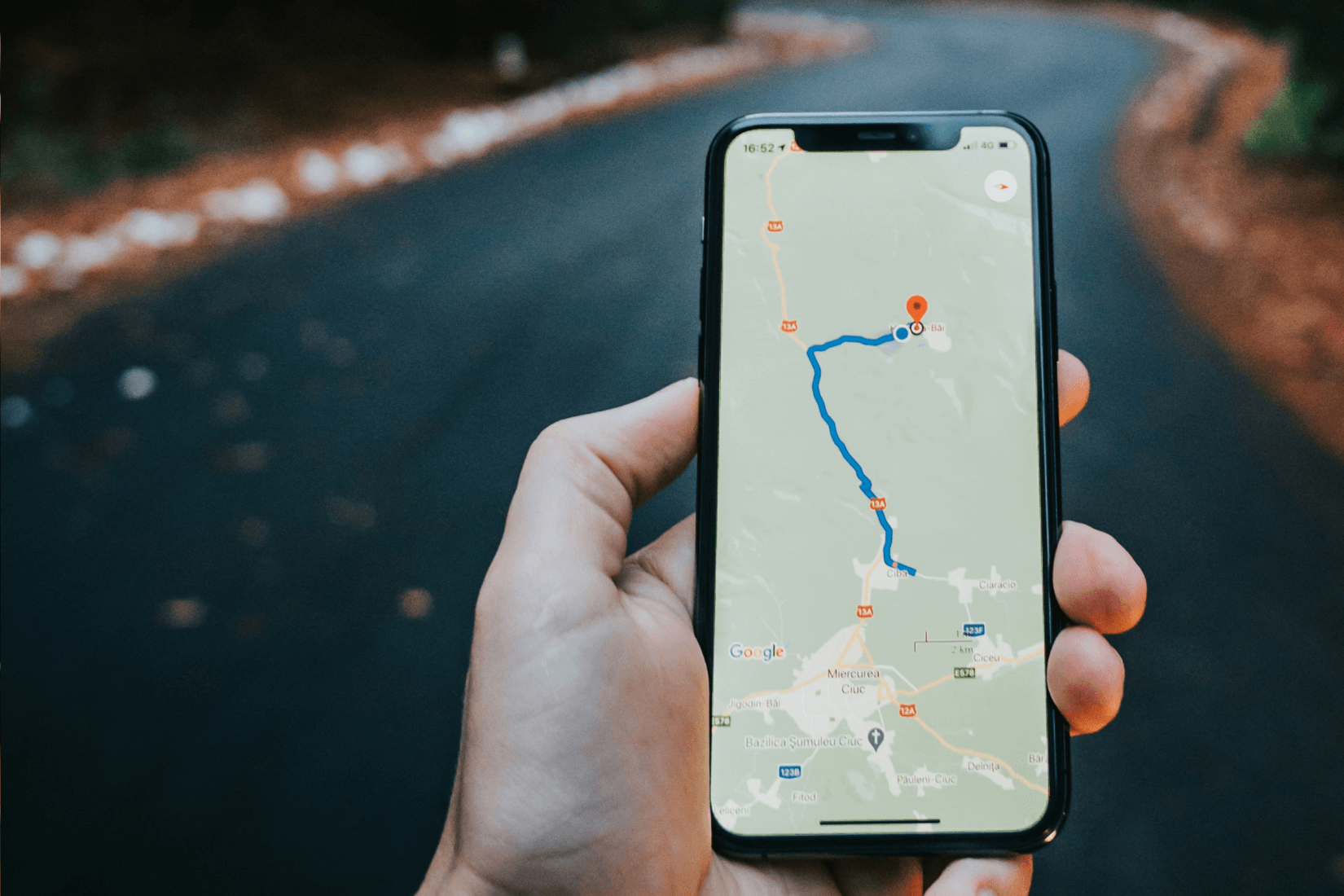

We love making maps at Kooba. Beautiful interactive maps can bring a website to life, and help users navigate in the real world.
But there’s more to good digital cartography than a simple Google Maps plugin. As with any feature of a website, we need to think carefully about the user experience, and design a solution that delivers real value, not just a cosmetic flourish.
The problem with maps
Maps have long been a source of friction for designers. In fact, the history of cartography shows that maps have never been easy to design.
Why is this? Mainly because maps need to accomplish tasks for their users, not just represent the territory that they correspond to. A map’s job is to help us navigate a space, not understand its exact layout.
Take London’s famous underground map. The stations and distances are not literally placed where they geographically exist, but rather where they relate to one another on your morning commute.
Of course, maps like this are rarely reusable. Each one is tied to a specific venue, event or layout. That makes them time consuming to produce and difficult to standardise. This effort can only be justified by the usefulness they offer their users.
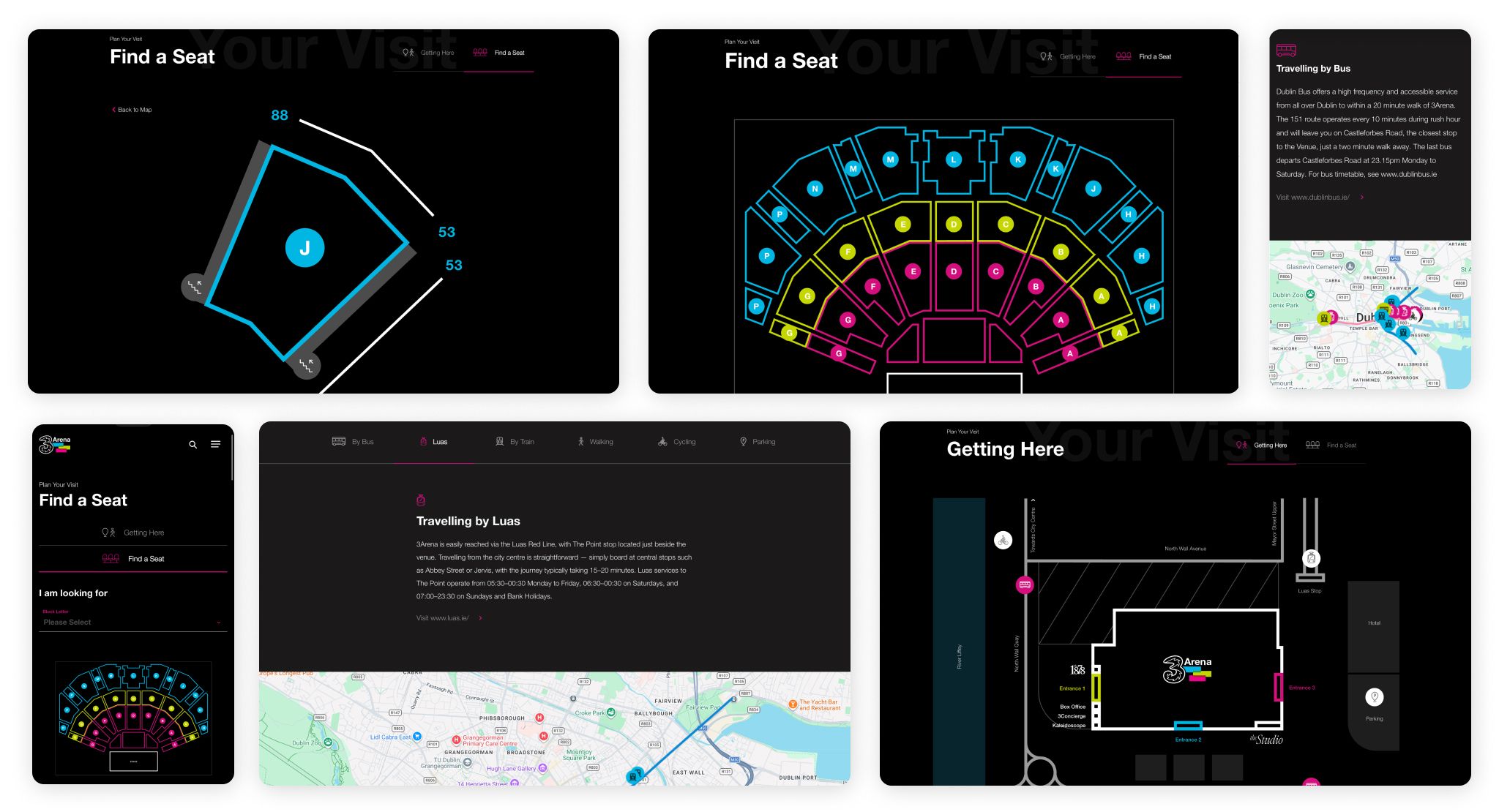
This approach is evident in our own work at Kooba. Look at, for instance, how 3Arena approach their seat finder. The map is not an exact representation of the venue, but it helps users understand where they will be sitting and what that means in practice. This is good map design.
To summarise: A map that does not support decision making is simply decoration, and may actually mislead visitors.
How to build effective interactive maps
With this said, how can your team use maps to engage and convert your audience?
Firstly, define what the map needs to help your users accomplish. In the above example, the 3Arena needed to help concert attendees find their seats. With this defined, it was already easier to build a map that delivered useful navigation for those users. This also allows us to remove elements of a map that may not be useful, and therefore limit the amount of clutter in the user interface.
Secondly, be open minded in how you layout information. There’s no “one size fits all” approach to building maps (just look at the massive range of ways we make maps of the globe). Pick the information that matters most to your audience and structure in a way that makes sense in every context.
Finally, keep your map as clear, simple, and accessible as possible. As we always say at Kooba, good design is accessible design. You want as many users as possible to be able to interact with your map, not for it to serve as a “nice to have” option. You should also provide other wayfinding solutions other than your map. This means that each user can still find the information that they need, and builds some redundancy into your solution.
Some of our favourite maps at Kooba
We’ve built lots of maps at Kooba, and some of our favourites are listed below:
Our wayfinding map for the 3Arena is stylistically minimal, with more information revealed as the user interacts with their assigned seating section. The result is an efficient experience that helps attendees access their seat quickly.
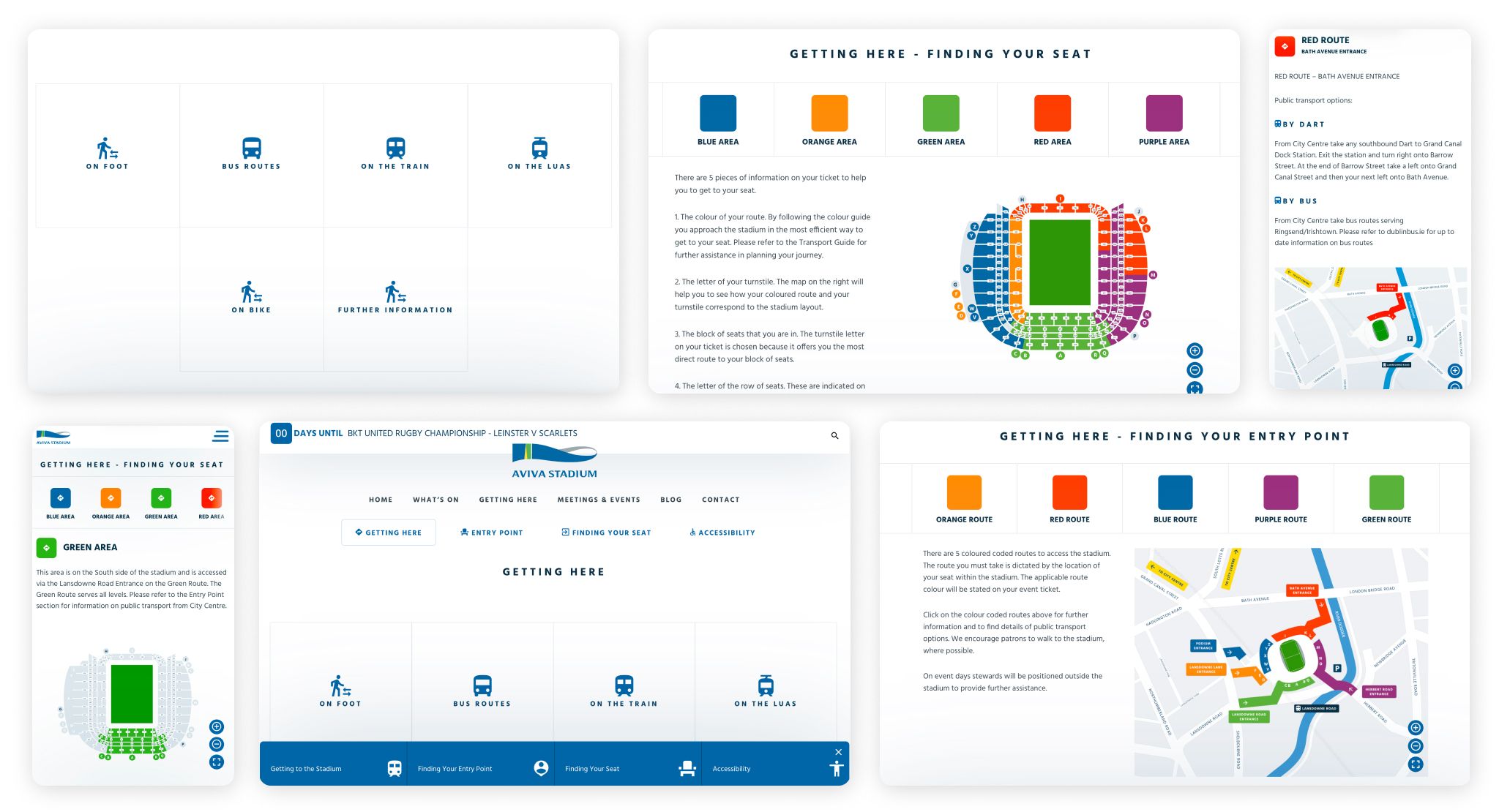
Our maps for the Aviva Stadium use a classic colour code, with details revealed depending on the colour selected. It makes it easy for attendees to navigate to the stadium, and to find their section once they arrive.
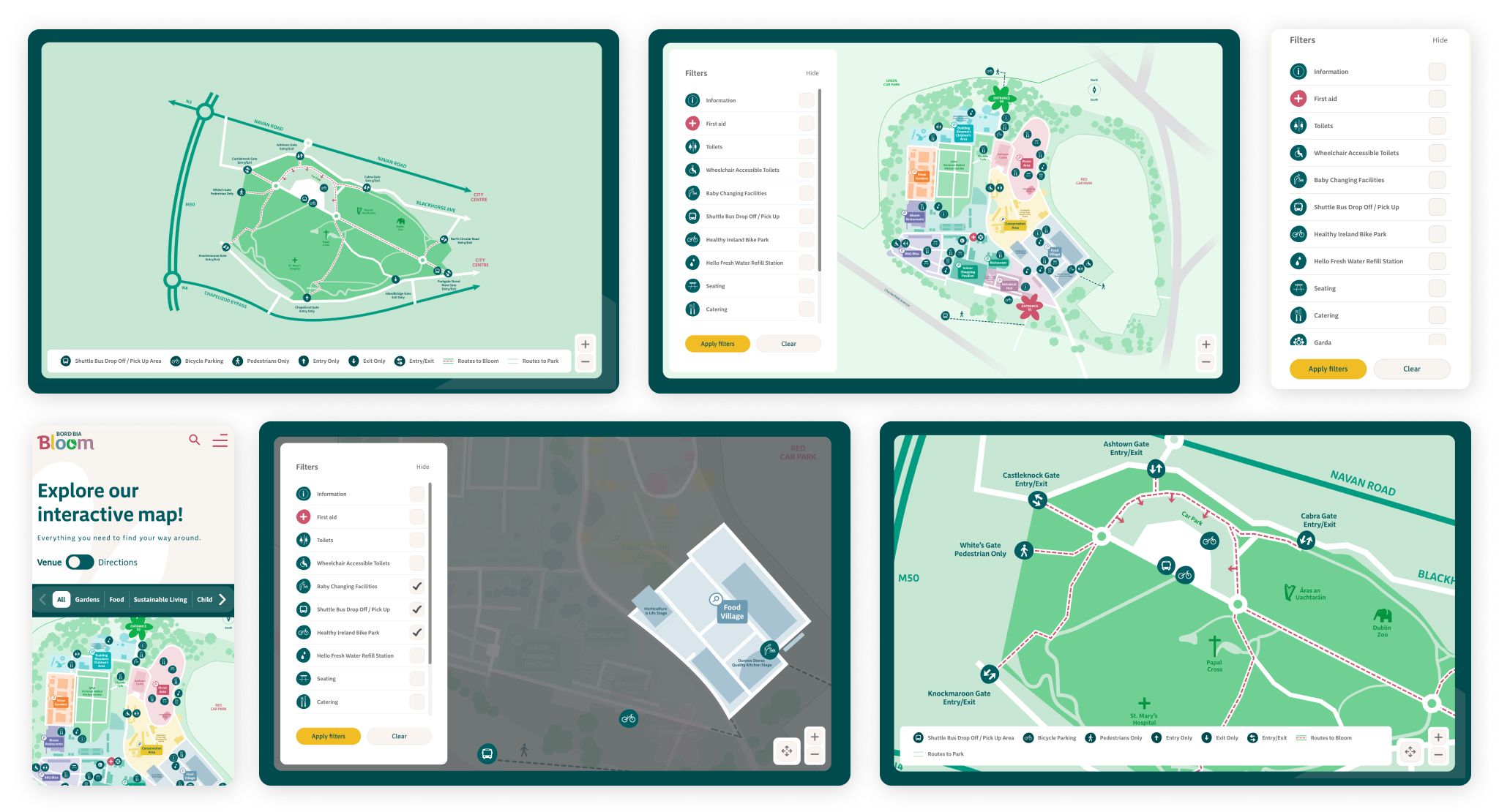
Our Bord Bia Bloom event map is more flexible, and is designed for users with a wide range of needs within the festival already. It includes filters to find specific resources, and interactive regions containing more details when needed.
What to remember
Maps are like any digital component. They are incredibly useful, but only when applied to solve clearly defined issues for the correct users.
It takes strong discretion and judgement to integrate map solutions correctly, and real design and development expertise to execute them properly. Fortunately for you, we possess all of this in buckets at Kooba!
If you’d like to start working on your own digital map (or anything else) just get in touch with our team today. We’d love to help you.