




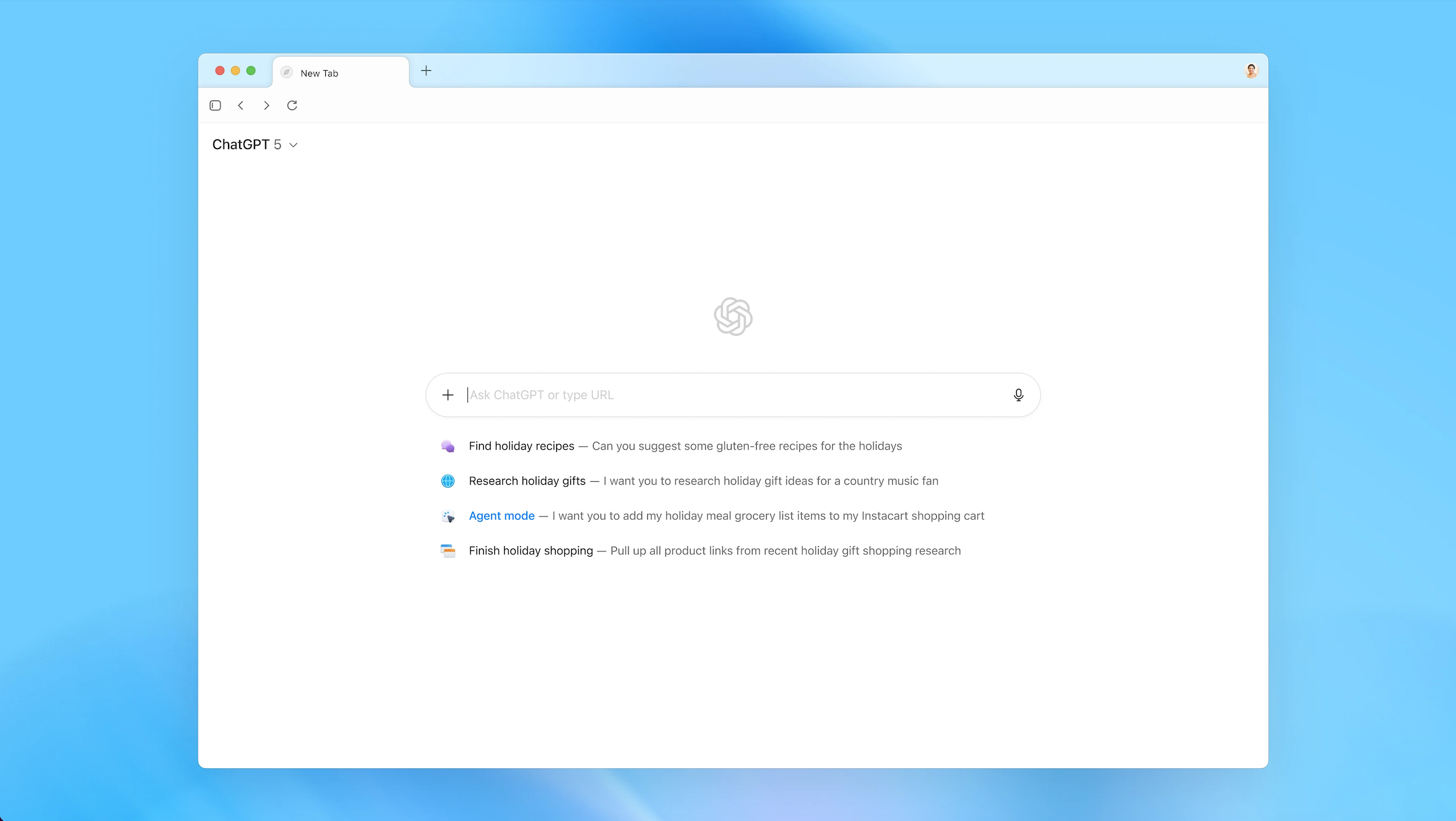

Last month OpenAI launched a new AI browser, Atlas. This tool offers a web browser “built with ChatGPT at its core”, promising a more streamlined integration of AI into user search activity.
But how does Atlas actually pull information from the web? And how can publishers rank their content higher within this new platform? The answer is a familiar one for accessibility professionals: ARIA tags.
Hold on, what is an ARIA tag?
Accessible Rich Internet Application (ARIA) refers to semantic descriptions placed within a website’s code. That may sound a bit complicated, but these basically serve as guidelines which help screen readers understand how a website is structured. For instance, ARIA may be used to describe a moving component, so that visually impaired users can understand the content shown without directly viewing the screen.
The inclusion of ARIA tags is best practice for any web development team who care about the accessibility of their work. It ensures that a website can be accessed by as many users as possible, making their experience more inclusive and universal. As a rule, we implement ARIA across all of our websites at Kooba, especially if we are aiming to provide an accessibility-compliant solution.
How do ARIA tags help websites rank in Atlas?
Atlas not only trawls the web like traditional search engines, but also has an “agent mode”, in which a ChatGPT agent actually navigates through sites, and even performs tasks within them. For these agents, Atlas uses ARIA as a map to help them understand how each website functions. As a result, websites with more semantic and well-coded ARIA will be more attractive for Atlas agents to visit, and will perform better on the platform.
In other words, the exact same elements which make a website more accessible also make it more effective at gaining AI traffic from tools such as Atlas.
Why ranking in AI tools matters so much
The world of content marketing seems to have been obsessed with AI rankings for the past 6 months. Nobody can seem to agree on the terms to describe this (GEO, AIO, and AEO are all used interchangeably) but most content writers agree that this is an important area of audience acquisition, and one which will only grow in future months.
Traffic from AI sources is still very low in terms of volume (ahrefs found that only 0.24% of traffic across 60,000 pages came from ChatGPT) but these sessions represent high-intent users who are serious about converting. A study of 12 million site visits by superprompt found that ChatGPT traffic converted at over 5 times the rate of Google traffic.
Grabbing higher volumes of this AI traffic is therefore highly valuable, and ensures that your business captures as many conversions as possible from a high-intent audience segment.
Accessibility matters
For Kooba and many of our clients, this is all excellent news. Existing accessible websites are set to earn an inclusion dividend for their previous good work. Of course, accessible websites have always performed better from an SEO perspective, but this will give them even more high-quality traffic. Whilst Google rewarded good semantic code and structured layouts, ARIA tags were traditionally ignored. Now they’ll be central to attracting AI traffic.
However, we would warn about adding ARIA values as a desperate tactic to drive AI traffic. Well written ARIA tags can dramatically improve usability, but poorly structured ARIA can worsen your site’s accessibility as it misleads screen readers. Like any accessibility work, this is worth doing for the right reason, or not doing at all.
Enjoying the inclusion dividend
Kooba have a proud history of building high-performing accessible websites, but we never anticipated the benefit of ranking within AI agentic searches.
That said, these kinds of pleasant surprises are common in the world of accessibility. When we build highly usable and user-focused solutions, we shouldn’t be shocked to see them adopted and appreciated by unexpected audiences. Obvious examples include the door handle, subtitles, predictive text and curb cuts, all of which were initially created for disabled users only to be embraced by a far wider market.
Accessibility should go hand in hand with usability and performance, as we’ve always argued at Kooba. If you’d like to build a website that not only performs for every user, but also drives valuable AI traffic, just get in touch with our specialist team today.