




It’s never been easier to build a website, but it's never been harder to build a good website.
As AI-powered tools accelerate the execution of design and development, the time to produce components has fallen. But this presents a problem. If we produce more in less time, then we are also reducing the time we have to think about the solution we are making.
I would argue that the best adoption of AI technology requires a more thoughtful, deliberate approach, informed by best-practice UX thinking. Now more than ever before, we need to measure twice if we want to cut once.
The problem: Warped incentives
When a task is more challenging to do, we plan it more deliberately and more strategically, as the investment of effort is so high. This was traditionally the case in web design, where designers (or at least, good designers) would research and analyse their project at length before actually beginning on their solution.
For UX teams, this typically involved a methodical process of tracking user journeys, measuring conversions through different funnels, and comparing with competitors across the industry. This process provided a wealth of insights, often going beyond the scope of the website itself.
Now, all this has changed. With one prompt I can create an entire website within seconds. Sure, it might not actually work or look that good, but the investment of time and effort is so low that this method can appear very tempting.
Of course, fast production means thoughtless production. One of the great benefits of the traditional design method was that it forced designers and clients to think carefully about what a website really needed to accomplish. Instead of just combining features and pages at will, there was an incentive to clearly define the underlying objective of the entire digital platform.
The solution: UX thinking
Fortunately, it is still possible to create a focused and outcome-oriented website, while still adopting the best of AI technology. By engaging in a preliminary UX research phase, you can clarify the goals and KPIs of your digital platform, and clearly map the objective of each page and component. From there, a UX team can provide you with wireframes and a sitemap to serve as the foundation for future designs.
The benefit of this UX research and design phase is that it aligns your finished design with the actual strategic needs of your business. Even if the quality of the subsequent UI and development phases is lacking, a good UX design will ensure that your site still caters directly to the users who matter most.
This process also gives your team the tools to analyse your site’s performance once it goes live. Because goals have been clearly defined ahead of time, you can gauge performance across the metrics most relevant to your organisation’s success, and optimise these over time as your site develops.
The opportunity: A human connection
It is also worth noting that the best design work involves real communication and collaboration between an agency and clients. The UX research phase provides a great opportunity for these discussions to happen, and allows us to incorporate new information and lessons into the design from an early stage.
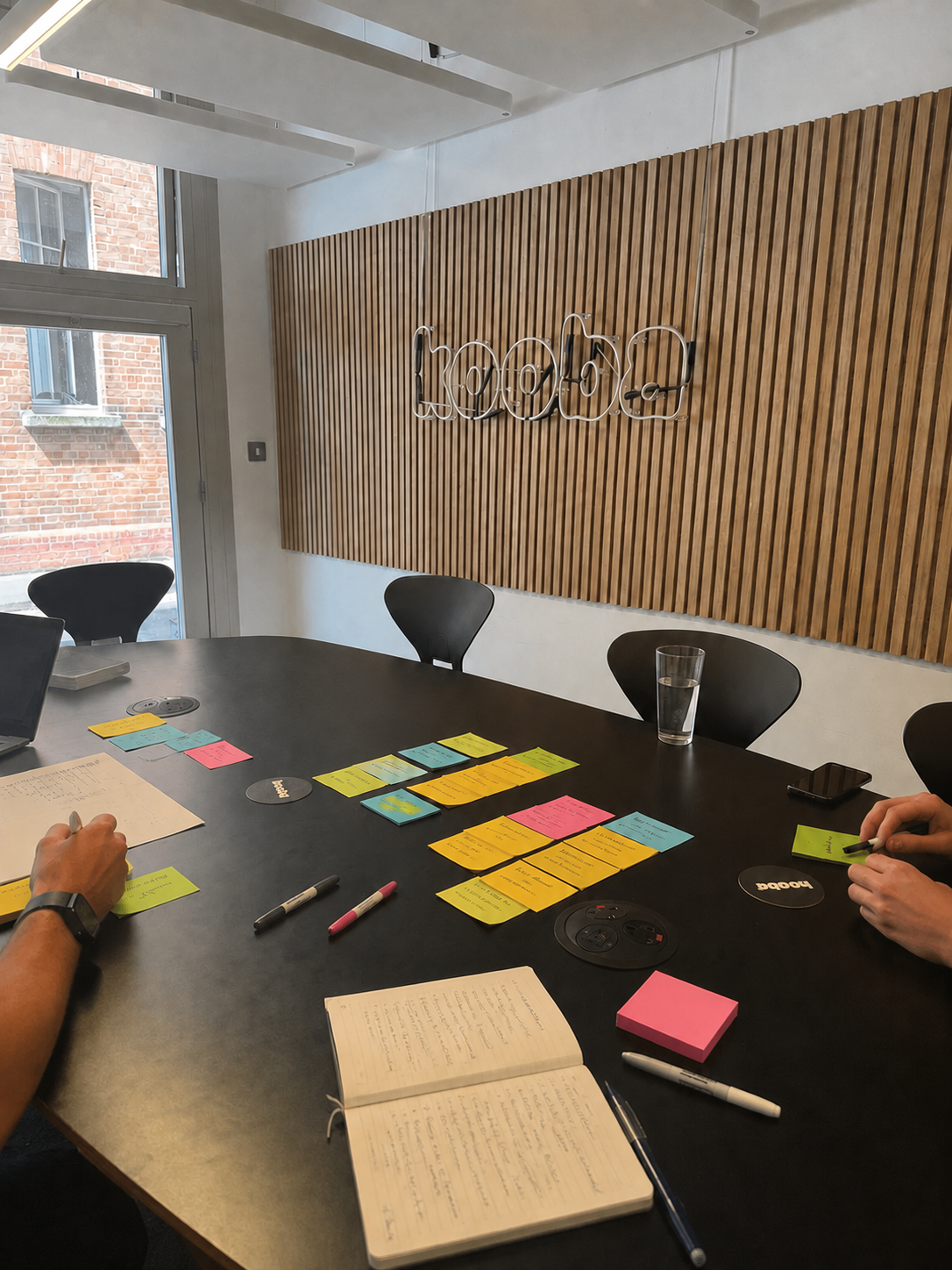
Ultimately, you know your business better than anyone else, and our designers will benefit from speaking with and learning from your team. If we rush into a project before doing this, the quality of the final design will struggle to reflect what actually makes your business unique and distinctive. How we collaborate with your team will depend on your specific requirements, but as a first step we typically host an interactive design workshop to better understand your goals, KPIs, user pathways, and audience.
Crucially, face-to-face discussions and collaboration create a human connection between designers and clients. As a designer, it’s always helpful to gain a personal investment in a project and buy into a client’s vision for their business.
The best of both worlds
Of course, this doesn’t mean that we should abandon this technology altogether. AI tools can transform the execution phase of a project, provided that we don’t allow them to distort the strategic thinking that underlies this work.
As we’ve argued in a previous article, AI systems can be effectively used within clearly defined “guardrails”. Rather than adopting these tools across an entire project, we should begin by deciding where we will, and won’t, use them. With this understood, AI and humans can both be trusted to do what they do best.
To learn more about our UX work at Kooba, you can read our recent overview here.
Better yet, reach out to our team today to begin work on your own project!