






Organic traffic is declining. Within certain industries, a large majority of firms have seen dramatic falls in the past year, with some losing up to 40% of their inbound traffic.
Simultaneously, Google’s AI overviews are now appearing in more searches than ever, featuring in over 1.5 billion queries a month. The correlation between these changes is clear, with more and more users receiving AI-generated answers directly within Google rather than clicking into websites and registering as search traffic.
From a marketing perspective, this is a concerning shift, particularly for content teams focused on SEO and traditional search channels. Fortunately, strategies exist to mitigate these changes, allowing you to rank highly within AI overviews and LLM mentions.
Declining web traffic - an overview
To begin with, it is worth discussing what we mean by “traffic”, and the reasons it may be decreasing for different websites. This is just a basic overview, so feel free to skip ahead!
Why is my traffic decreasing?
This is the most basic, and most important, question. All else held equal, less inbound traffic will mean less conversions, less leads, and less revenue. Addressing declines in traffic is therefore vital from a marketing perspective.
The first thing to remember is that a decline in traffic can be caused by a wide range of factors. This is because traffic comes from many different sources, all of which may fluctuate for different reasons. Maybe organic social traffic has dried up, or maybe you’ve spent less on paid traffic than you did previously. Or maybe this is just a seasonal decline!
How can I check the source of my traffic?
To get to the bottom of declining traffic, you can use a variety of analytics tools. Google Analytics 4 (GA4), for instance, will allow you track inbound traffic from different sources over time. This can be calculated at the aggregate level of organic search, direct clicks etc, or at the granular level of individual pages and platforms.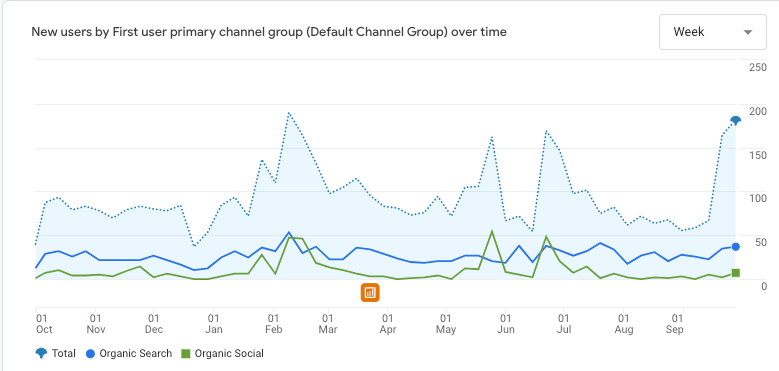
An example showing the source of new users over time on GA4
Google Analytics also allows us to see which pages on a website these users land on, and this too can be filtered by source. This means that we can make estimates about which content is attracting users to your website. Another useful tool here is Google Search Console, which displays the keywords you have ranked highly for within organic searches, and the number of viewers who have clicked onto your site for each relevant keyword.
AI overviews and web traffic
If you’ve identified a fall in organic traffic over time, it might be time to start thinking about AI overviews and LLMs as a potential cause. Here’s why:
The basics
In a significant minority of Google search results (roughly 13%), users are shown an AI generated overview which aims to directly answer their query. This overview will draw from real sources, and will link to them, but many users will find an answer within the overview and avoid clicking any links.
Assuming that this information is accurate (which it isn’t always), this is a great feature for users. For publishers, however, this can lead directly to a decline in organic traffic, as content which once drew in traffic now gets surfaced in low-click overviews. In fact, roughly 60% of queries now result in zero clicks, with answers provided within the search page itself.
A new tradeoff
Google has claimed that this decline in traffic quantity will be compensated by a rise in content quality. However, unlike traditional search metrics which are freely accessible on Google Search Console, Google has kept the data on search overviews secret. The assumption amongst many publishers is that this is due to the decline in the overall value of inbound traffic caused by these overviews.
Another issue concerns how Google selects which content to display within these overviews. Kooba have already begun optimising content in an effort to do exactly this, in a process known as Generative Engine Optimisation (GEO, also called AIO and AEO). Whilst it is hard to measure the performance of these campaigns, there are some useful options available. See our recent blog on the topic here to read more.
How to manage a decline in traffic
This may seem a bit “doom and gloom”, so it's worth pointing out that several options exist to counteract a decline in organic search.
Improved LLM visibility
The first, as I’ve mentioned already, is to rank higher within AI overviews and AI queries more broadly. This is easier said than done, but there are simple steps you can take today to make your content more attractive to large language models (LLMs). These include:
- Semantic bundling of content (making sure topics are clearly contained within defined paragraphs)
- Using high quality sources and data to back up your claims where possible
- Producing content that is directly relevant to your audience’s needs and queries
- Ensuring that your backend is clear and well-structured
These tactics are similar to what you might recognise for conventional SEO best practices, as the two overlap significantly.
A refocus on brand and content
Another solution is to shift your priority away from measured interactions altogether. You won’t know if your content and brand is shown within AI-overviews, but that doesn’t make these impressions useless. By focusing on writing high-quality and accurate content across your website, and by clearly articulating your brand’s key selling points and values, you can hope to rank highly within LLM answers and enjoy the benefits of positive brand visibility.
In other words, rather than trying to channel AI queries into your website, you can instead focus on improving the language that LLMs use when discussing your brand and your products. And if you’d like, both of these strategies can be combined to drive high-intent leads into your marketing funnel.
At Kooba, we can help you do this by adapting your website to accommodate AI traffic. To better understand a decline in traffic and your options for AI optimisation, just get in touch with our team today.