






Does it ever seem as if your website just doesn’t deliver the results that it really should?
You’re not alone. It’s all too common for businesses to suffer from under-performing websites that constrain their growth and damage their impression with customers and clients.
Fortunately, underperforming sites can be dramatically improved, often without requiring a complete rebuild. By troubleshooting the cause of your issues and implementing targeted remediations, our team at Kooba can transform the power of your website, and help unlock more growth for your organisation.
What does performance mean to you?
Before you fix an issue, you need to define it. That’s why we’ll start by understanding the goals of your website, and identifying the key ways in which it is underperforming. For instance, a B2B SaaS company may prioritise generating leads and conversions, but a FMCG firm might instead focus on bringing in high-volumes of traffic.
With your specific requirements in mind, we can gain a more complete picture of what is holding back your current site. Some of the most common improvements are detailed below:
Increasing technical performance and improving load-times
Everyone notices when a website loads slowly. Fortunately, there are many ways that you can increase the technical performance of your website and reduce the load-times of your pages.
On-demand video delivery
Video content can be a highly engaging and effective element of your website, but can also hurt load-times and weaken the overall performance of the site. By using on-demand video delivery, video will be streamed into your site when users need it, rather than being loaded immediately and stored in advance.
Server side caching
Server side caching helps your website load faster by storing ready-made versions of pages and content, rather than generating everything from scratch each time a user visits the site. This reduces the amount of work required from the server and helps pages respond more quickly, particularly during periods of high traffic.
Server side caching can have a dramatic impact on load-times. See the example below, where we reduced load-times by over a second.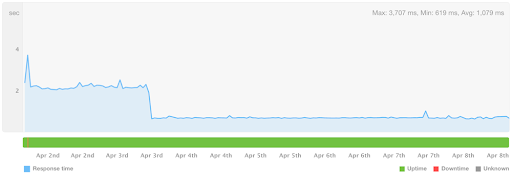
Required asset delivery
Every page on your website relies on assets such as images, fonts, scripts and stylesheets. By only loading the assets that are required for each specific page, you can reduce unnecessary weight and improve load times. This ensures users are not downloading files that are not relevant to the content they are viewing.
Checking Google Tag Manager scripts
Google Tag Manager is a useful tool for managing tracking scripts and marketing tags, but it can also slow down your website if it is not configured carefully. Reviewing and optimising the scripts loaded through Google Tag Manager helps reduce unnecessary requests and ensures only essential tags are active.
Third-party plugin optimisation (or removal)
Third-party plugins can add useful functionality, but they can also introduce extra scripts, styles and requests that affect website performance. Regularly reviewing these plugins allows you to optimise those that are necessary and remove any that are no longer adding value.
Managing page sizes
Large pages take longer to load, especially when they include lots of imagery and content. One simple way to speed up your website is by breaking down content between different pages. This ensures that each page loads quickly, and allows you to segment information in an intuitive way for users.
Converting more users
Of course, sometimes a website may load quickly but fail to actually convert users into leads. In this instance, improving technical performance will provide only marginal gains. To really solve this issue, you’ll need to dig into your conversion pipeline and the design of your website.
Funnel analysis
A great place to start in this situation is with funnel analysis. This involves tracking users as they travel through your website, and identifying the areas where they leave the site or fail to convert. For instance your homepage might perform well, but your contact page may be less functional.
This technique allows us to prioritise improvements to the weakest elements of your website, rather than overhauling the entire design. In the below example, an improvement to the product page would have a greater impact than one to the landing page.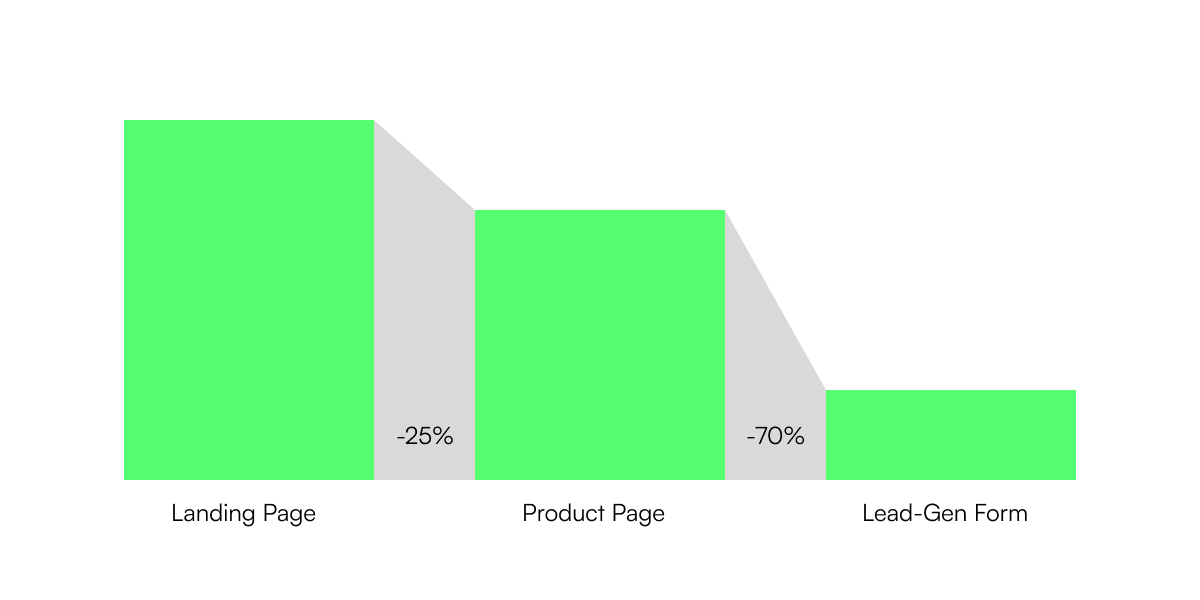
Conversion rate optimisation
Another method that can increase the leads generated by your website is conversion rate optimisation (CRO). By adjusting the design of different components and pages, we can measure which perform the best, and rebuild your website accordingly.
Instead of guessing what will lead to conversions, CRO uses real data to make your website more efficient. It also helps you understand what does, and doesn’t, resonate with your audience. See the example below where the elements of a button are changed to identify the highest-performing option.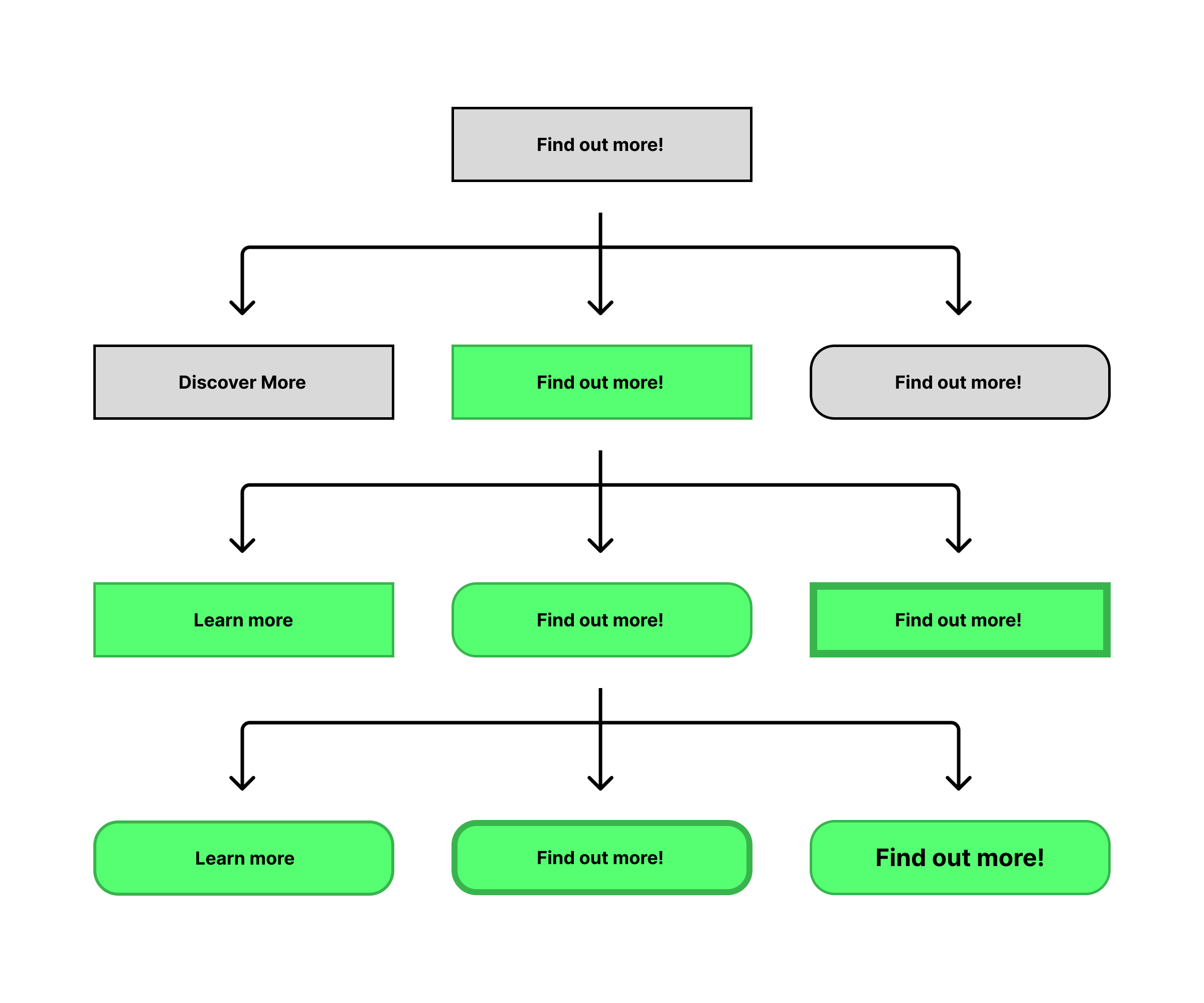
Acquiring more traffic
Finally, even the most efficient and fast websites need actual users to visit them. Better technical performance will improve your visibility on search engines like Google, but there are also other strategies you can follow to gain organic traffic from traditional and AI sources.
Search engine optimisation (SEO)
SEO has been important for decades, and can still make a dramatic difference to your website today. By publishing content that is relevant to your audience and ensuring that your website is fast and accessible, you can increase the chances of search engines placing you higher on their ranking pages.
Alongside improved technical performance, Kooba can supercharge your SEO campaigns by designing bespoke content pages, implementing semantic code across your website, ensuring each page is indexed, and writing schema for your content.
Generative engine optimisation
As audiences turn to large language models (LLMs) like ChatGPT and Claude, your website will also need to be easily found by these tools. This process is often referred to as generative engine optimisation (GEO).
Whilst there is a significant crossover between GEO and SEO, GEO tends to prioritise websites that are highly contextual and easy to navigate. A clearly structured website will be preferred by AI agents as they search the internet, providing your brand with more mentions when audiences ask queries.
You can learn more about GEO and AI visibility here.
Get started
At Kooba, we love bringing underperforming websites back to life. The easiest way to begin improving your digital platform is with some expert analysis from our team, followed by strategic remediations based on your specific needs.
To get started on your own journey towards digital excellence, just reach out to our team today.